Notes and warnings
Notes contain additional information on using and configuring the device.
Tips contain important information, tips or recommendations on device operation and setup.
Product description
SV-BA301-E is a camera designed for real-time video surveillance. Due to the QuadHD resolution, the transmitted image is clear and detailed. PoE technology allows installing the camera everywhere, regardless of the location of the power supply. It also saves on the cost of power cables and makes the installation simple and not time-consuming.
Features and capabilities:
– Night vision provides clear images even in low-light conditions.
– Motion detection notifies you of events as they occur.
– Video archive provides options for saving recordings: to a memory card for local storage or to network storage1. If the local storage fails, all recordings will remain available on the network storage.
– PoE power supply.
Technical specifications
| Interfaces | |
|---|---|
| Memory card | 1 × MicroSD/SDHC/SDXC up to 256 GB |
| Ethernet | 1 × 10/100BASE-T (RJ-45), support for PoE |
| Sensor | |
| Type | 1/3” progressive scan CMOS |
| Effective pixels | 4 M |
| Lens and illumination | |
| Focal distance | 2.8 mm |
| Aperture | F/2.0 |
| Field of view (horizontal) | 100° |
| Field of view (diagonal) | 116° |
| Angle adjustment (tilt) | from 0° to 90° |
| Angle adjustment (rotate) | from 0° to 360° |
| IR illumination | yes |
| IR range | up to 40 m |
| Image | |
|---|---|
| Image | color |
| Maximum resolution | 2560 × 1440 |
| Maximum frame rate | 25 fps |
| Bit rate | up to 10 Mbps |
| Video compression | H.264, H.265 |
| Image quality improvement | BLC, HLC, DWDR, ANTI-FLICKER, DEFOG |
| Signal-to-noise ratio | no less than 50 dB |
| Minimum illumination | color: 0,02 lx, bw: 0 lx with IR |
| Audio | |
| Built-in microphone | yes |
| Built-in speaker | yes |
| Audio compression | PCM, AAC, MP2, ADPCM1, G.711U (PCMU)1, G.711A (PCMA)1, G.7261, ROI1 |
| Voice pickup distance | up to 5 m |
| Physical specifications | |
| Power supply | 12 V DC, PoE 802.3af (Mode A)2 |
| Housing | metal |
| Form factor | cylindrical camera |
| Mount options | indoor and outdoor |
| Dimensions (W × H × D) | 70 × 67 × 186 mm |
| Weight | 0.38 kg |
| Operating temperature | from -40 to +60° |
| Operating humidity | no more than 90 % (non-condensing) |
| Ingress protection | IP66 |
| Lifetime | no less than 5 years |
1 Under development.
2 Не поддерживает PoE Mode B (питание по парам 4/5 и 7/8).
Design
Front view
The front view of the camera is shown in the figure below.
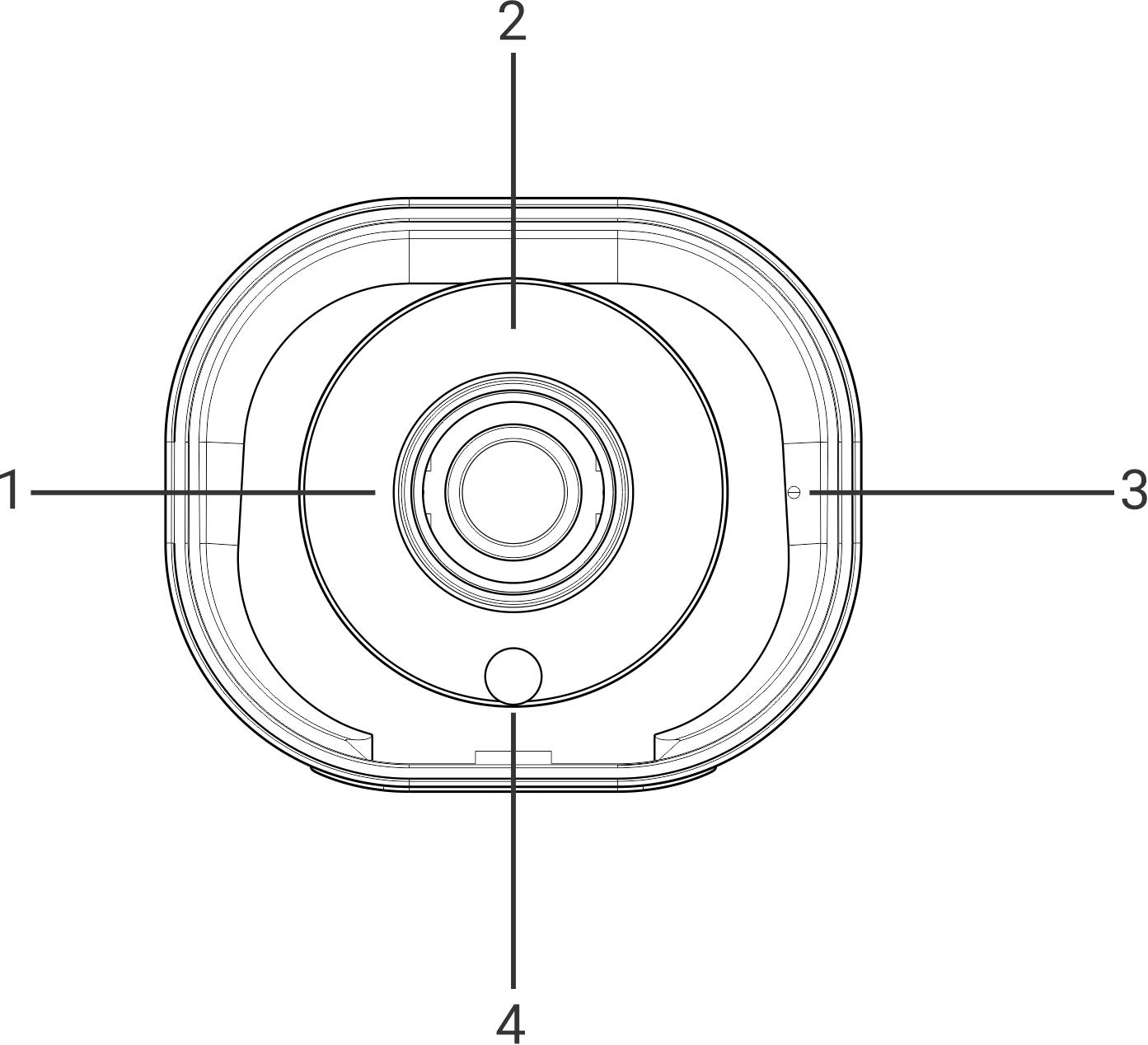
| № | Description |
|---|---|
| 1 | Lens |
| 2 | Indicator |
| 3 | Microphone |
| 4 | Light sensor |
Top view
The top view of the camera is shown in the figure below.
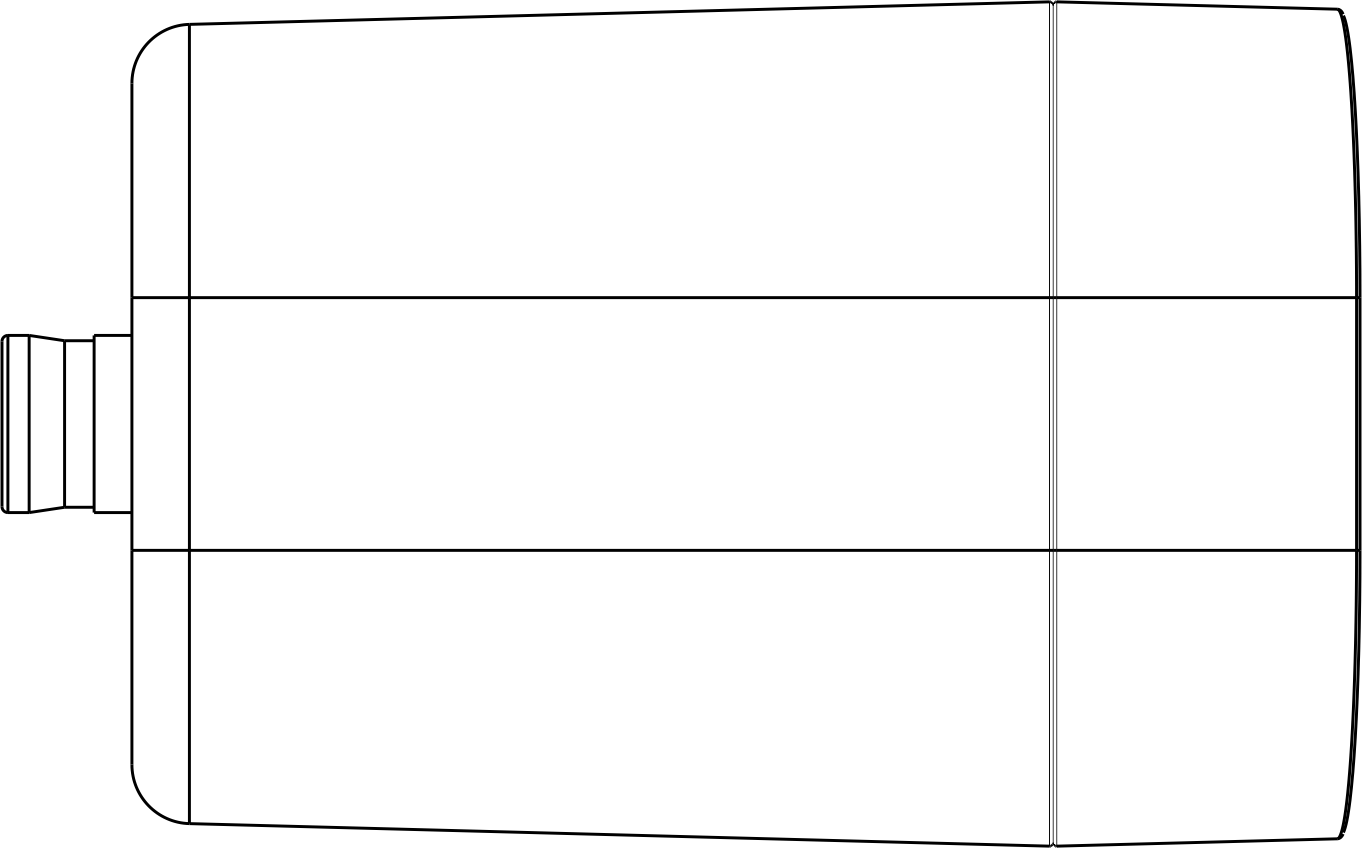
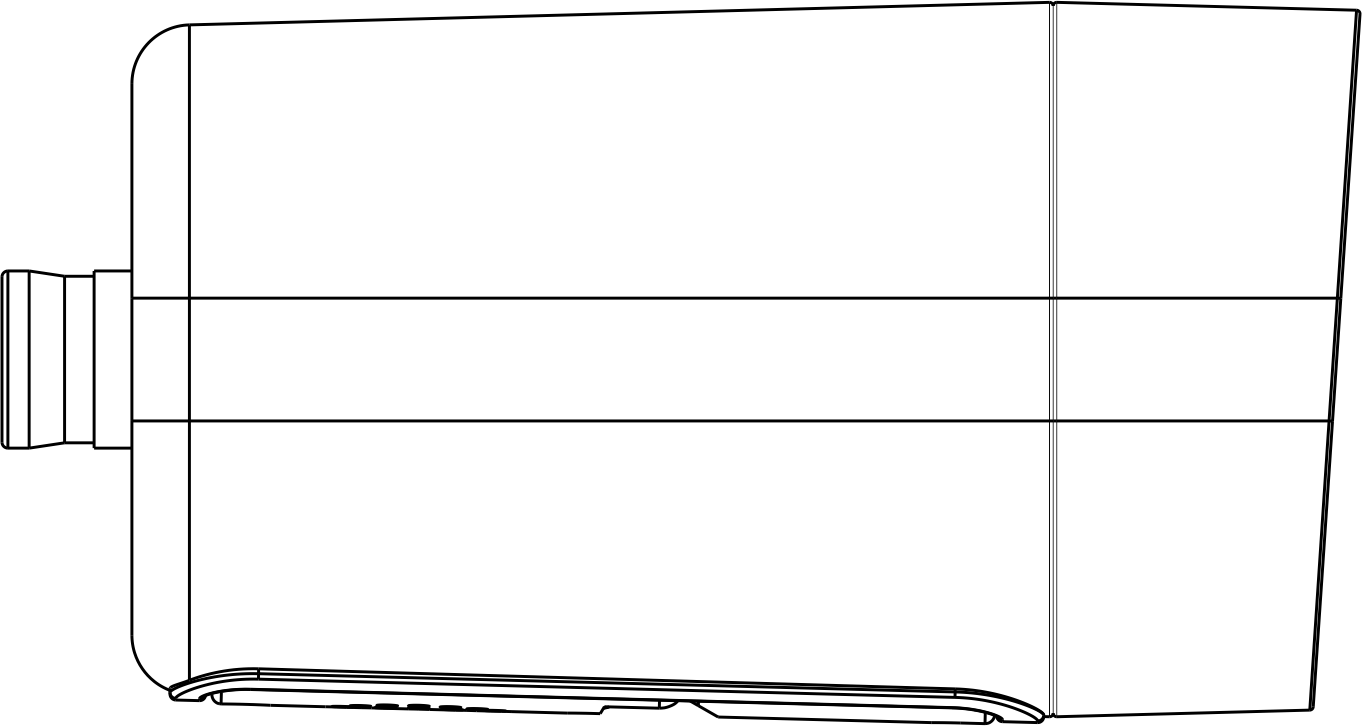
Side view
A side view of the camera is shown in the figure below.
Bottom view
The bottom view of the camera is shown in the figure below.
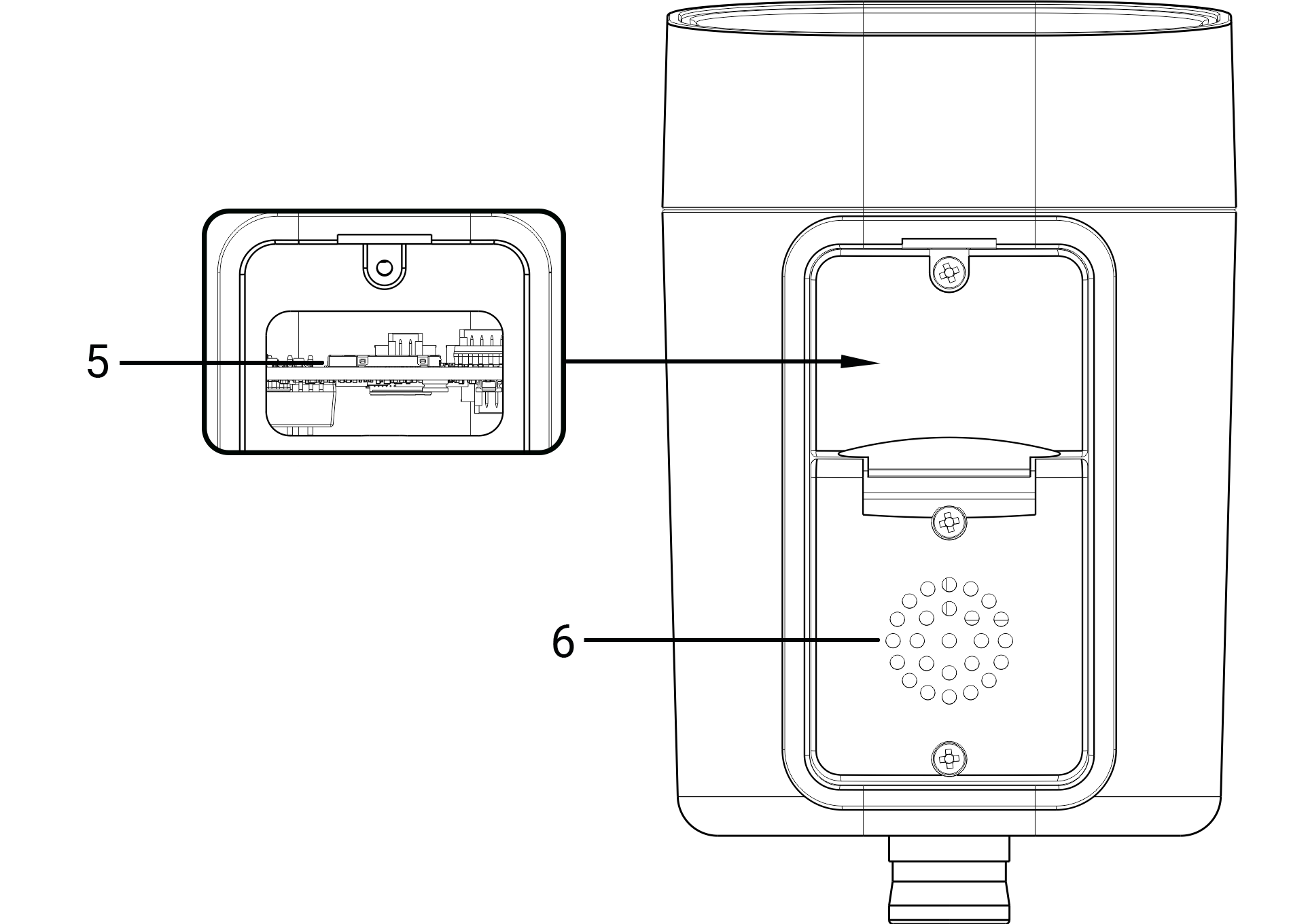
| № | Description |
|---|---|
| 5 | MicroSD card slot |
| 6 | Speaker |
Base view
The base view of the camera is shown in the figure below.
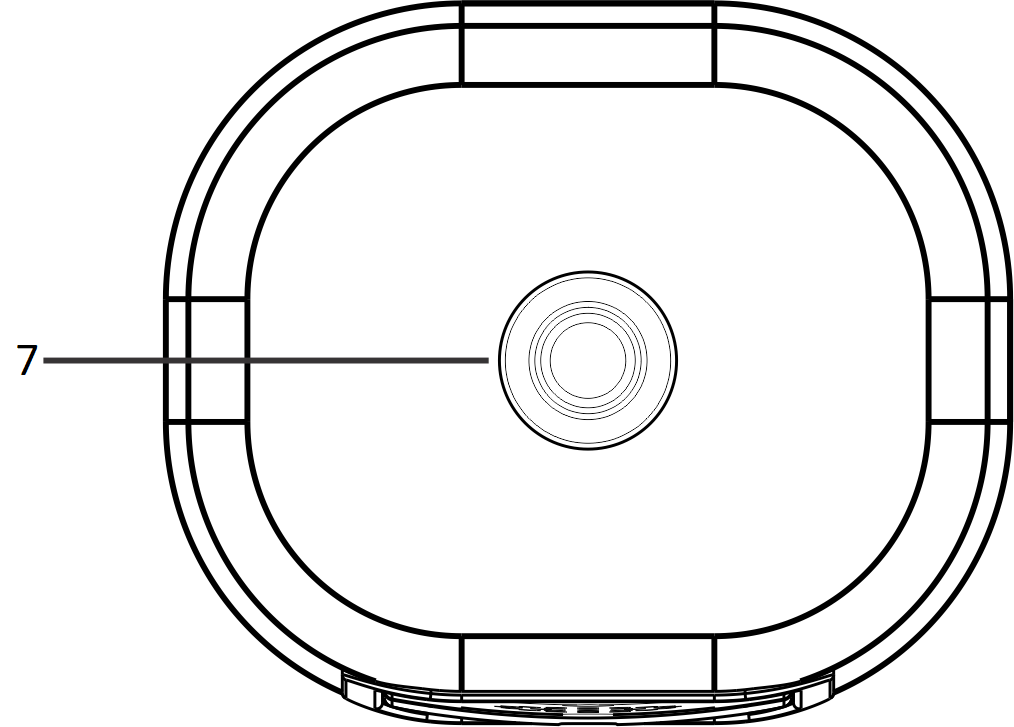
| № | Description |
|---|---|
| 7 | Сable hole |
Cable design
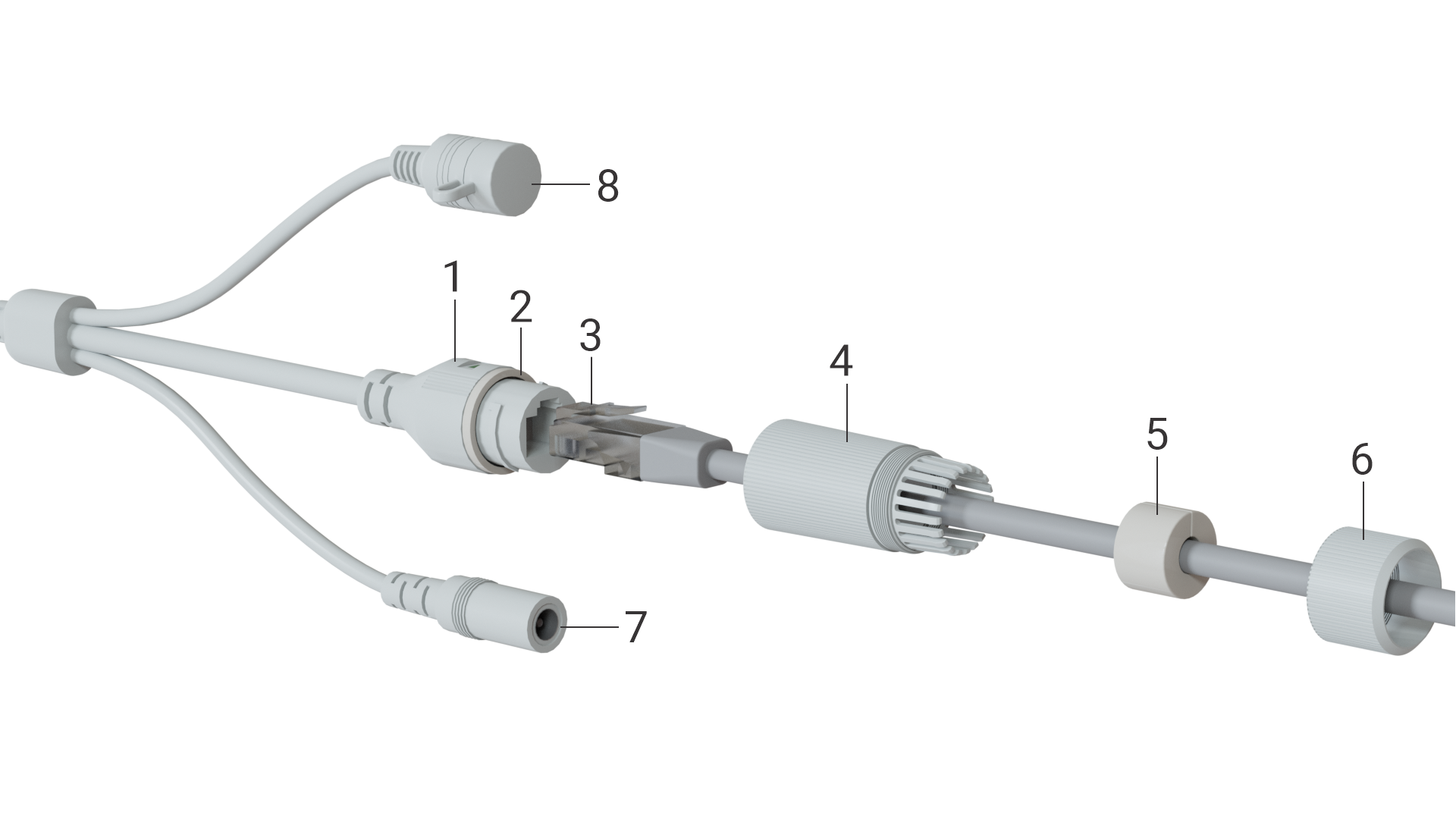
| № | Description |
|---|---|
| 1 | Network interface |
| 2 | Sealing ring |
| 3 | Ethernet cable |
| 4 | Cable gland |
| 5 | Waterproof ring |
| 6 | Locking nut |
| 7 | Power adapter connector |
| 8 | Reset button |
Light indication
Indicator | Device state |
|---|---|
| Red, solid | The device is working |
| Off | The device is not working |
Delivery package
SV-BA301-E standard delivery package includes:
- SV-BA301-E IP camera;
- Mounting kit;
- Case mounting template;
- Installation and initial configuration guide.
Reset to factory settings
There are two ways to perform a factory reset:
- Software reset. In the device web interface, enter "System settings", select "Configuration" and click "Reset to Factory Default Settings".
- Hardware reset. The reset button is located on the cable. Remove the protective cap, then press and hold the reset button for three seconds. The camera will then reboot.
Operating conditions
- The camera is designed for indoor and outdoor usage.
- Do not install the device near heat sources.
- Do not expose the device to smoke, dust, water or other liquids. Do not mechanically damage the device.
- Do not open the device case. There are no user-serviceable elements inside the camera.
- At the end of its service life, do not dispose of the camera with normal household waste. Take it to an electronics recycling center.
Device installation
Selecting the camera location
- Determine the areas that need to be monitored. Consider that entrance doors, windows, and various objects may obstruct the camera's field of view and reduce it.
- Pay attention to the lighting where the camera is installed to ensure a clear image. Avoid direct sunlight and other bright light sources directed at the camera lens. Also consider light sources that may create shadows or glare in the image.
- Consider the location of the power supply. The use of extension cords or additional cables is not recommended, as this may impair the quality of the power supply.
Mounting using a bracket
The unit can be mounted on walls and ceiling.
- Select a location for the camera based on the recommendations in the "Selecting a camera location" section.
- On the selected surface, mark where the four holes for the bracket will be drilled. Use the supplied template for this purpose.
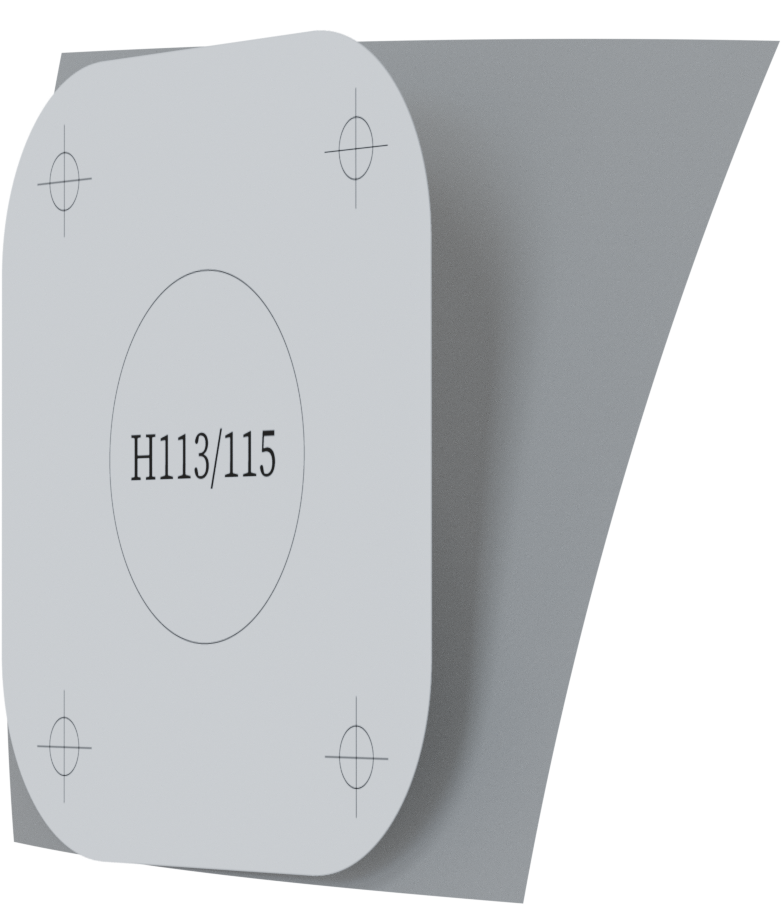
3. Separate the template from the backing and stick it to the wall.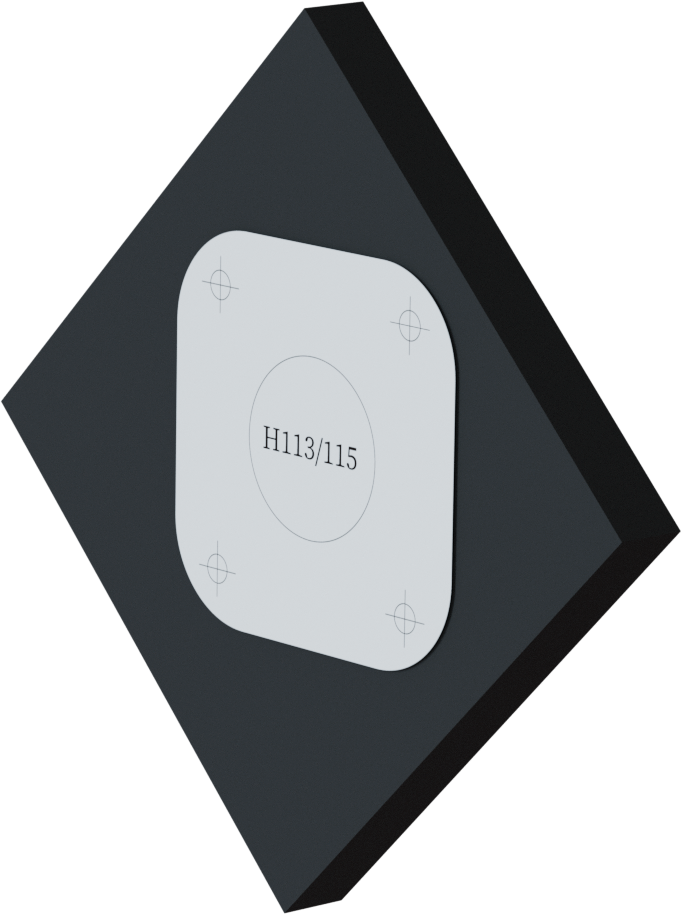
4. Drill four holes according to the template. Use dowels if necessary.
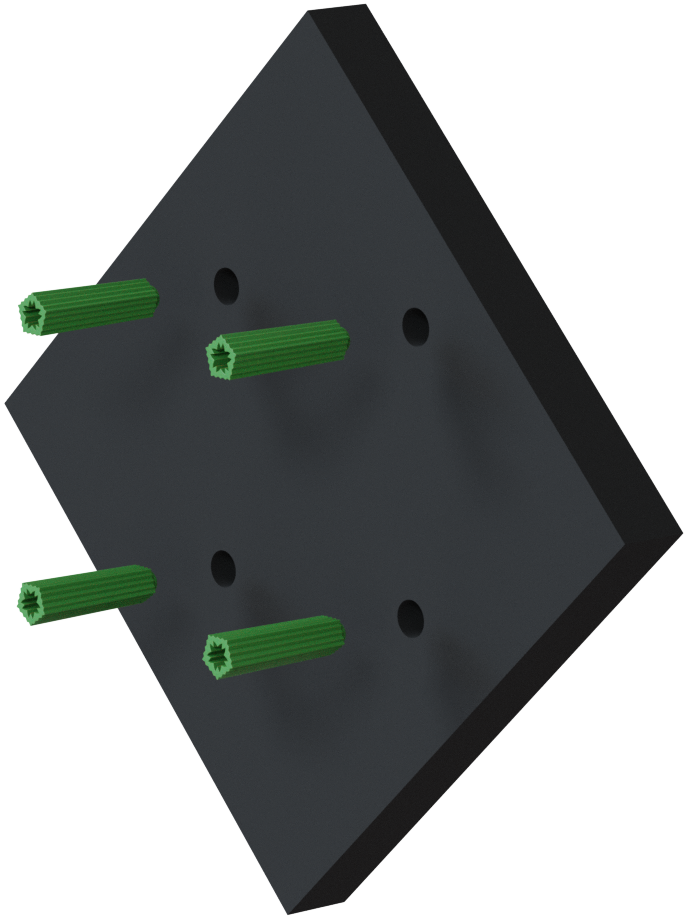
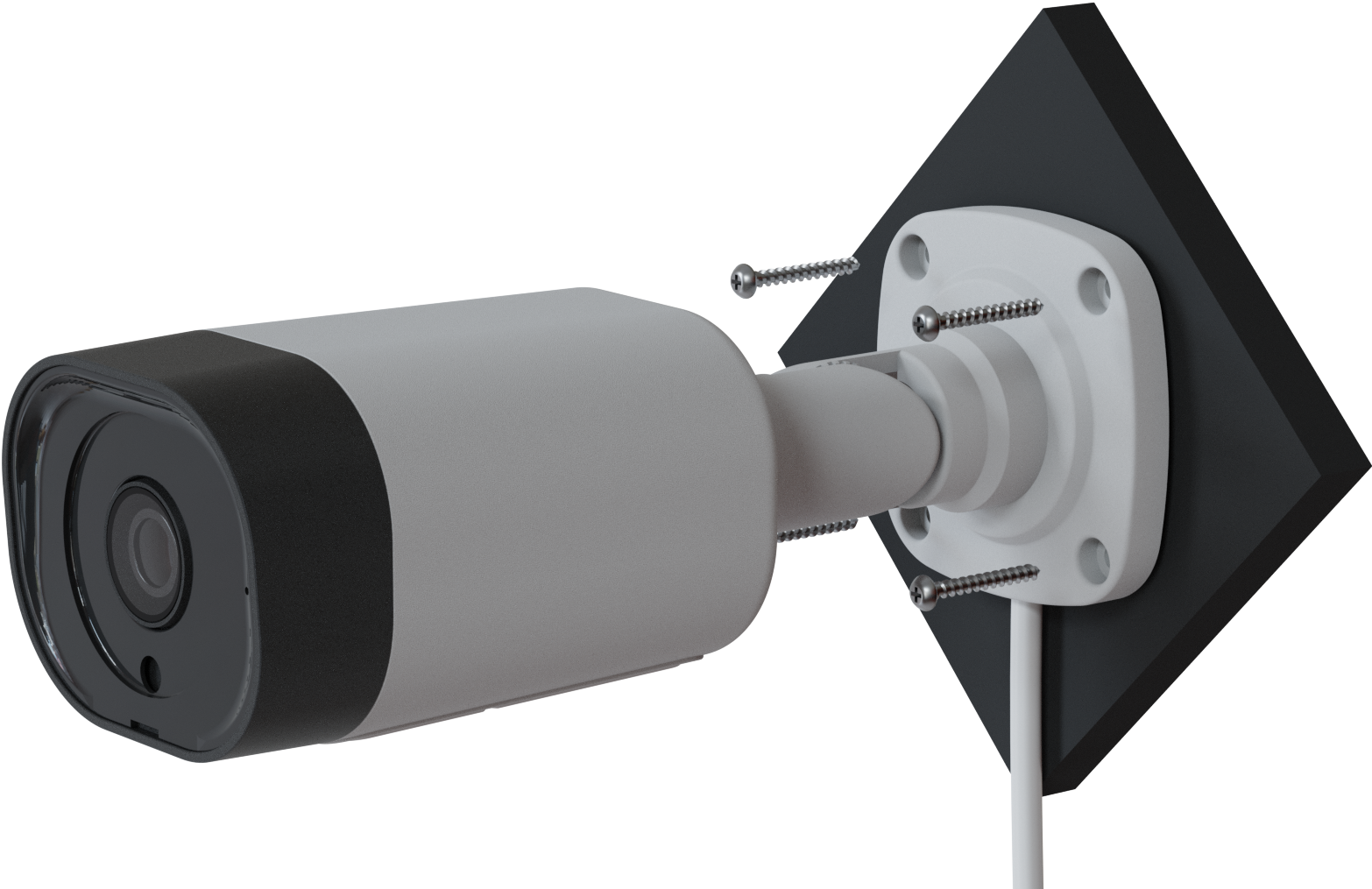
5. Align the holes on the wall with the holes on the bracket and fix the camera with screws.
A view of the camera placed on the ceiling is shown in the figure below.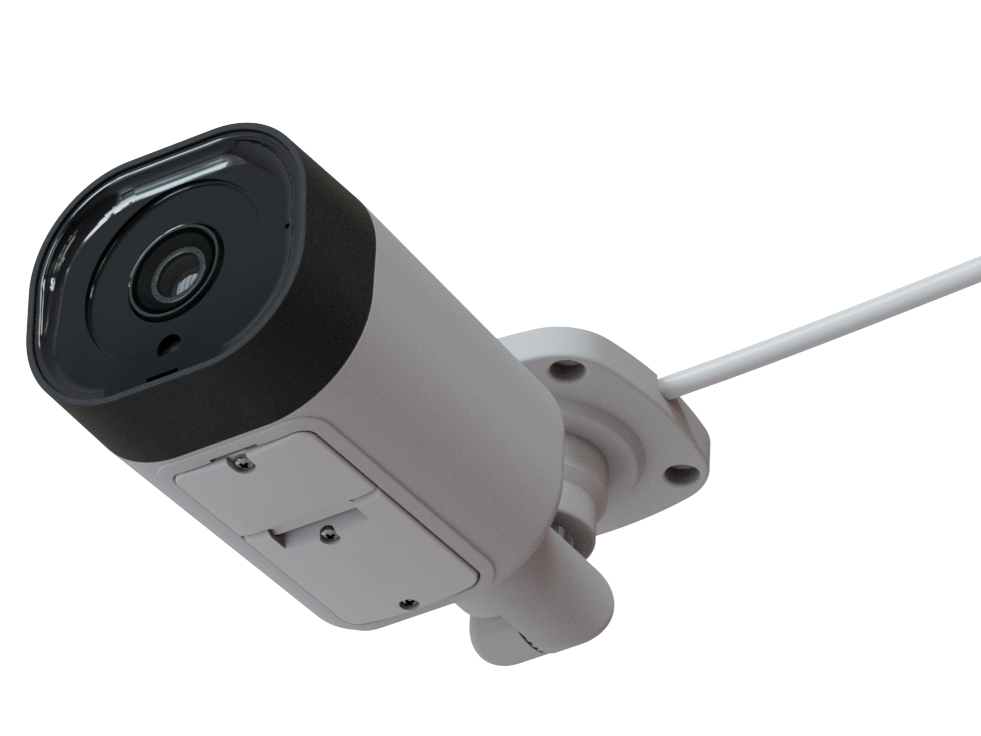
6. Connect the Ethernet cable in the order shown in the image below: slide the O-ring (2) over the sealing cap of the network interface (1). Place the locking nut (6) and the cable gland (4) on the Ethernet cable (3). Insert the Ethernet cable (3) into the network interface. Tighten the cable gland (4) and fix it to the sealing cap (1). Slide the waterproof ring (5) over the sealing ring (4). Make sure that the ring fits snugly over the connector. Tighten the locking nut (6) and fix it to the cable gland(4). Once the Ethernet cable is connected and insulated, connect the power cable to the power connector (7). The assembled cable is shown in the figure below.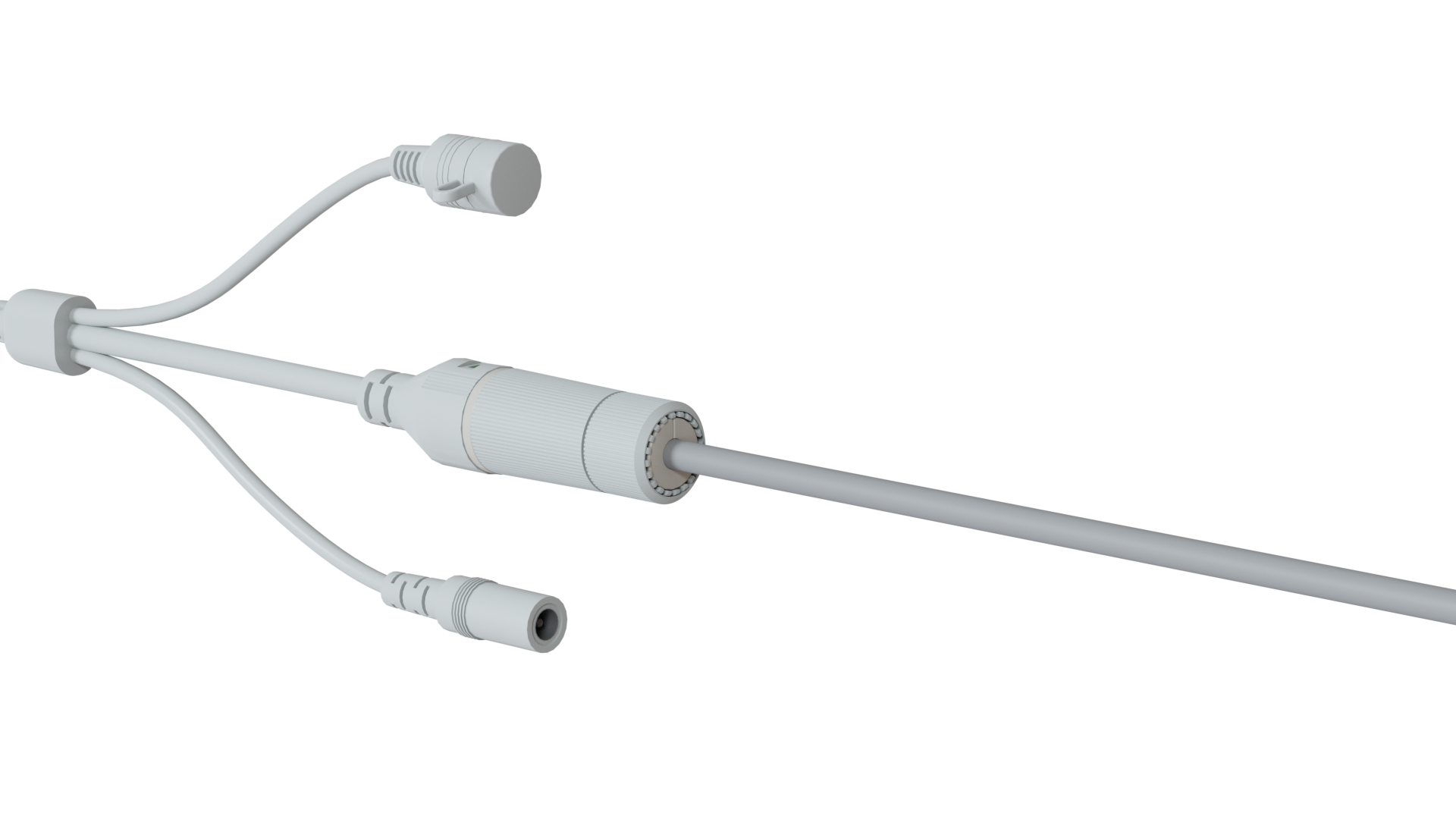
Device management via the web interface
Getting started
- Connect the camera to the local network.
Open a web browser and enter the device's IP address obtained from the DHCP server in the address bar.
The authorization page will be displayed in the browser window. Enter the username and password in the appropriate fields. (By default, the login is admin, the password is password).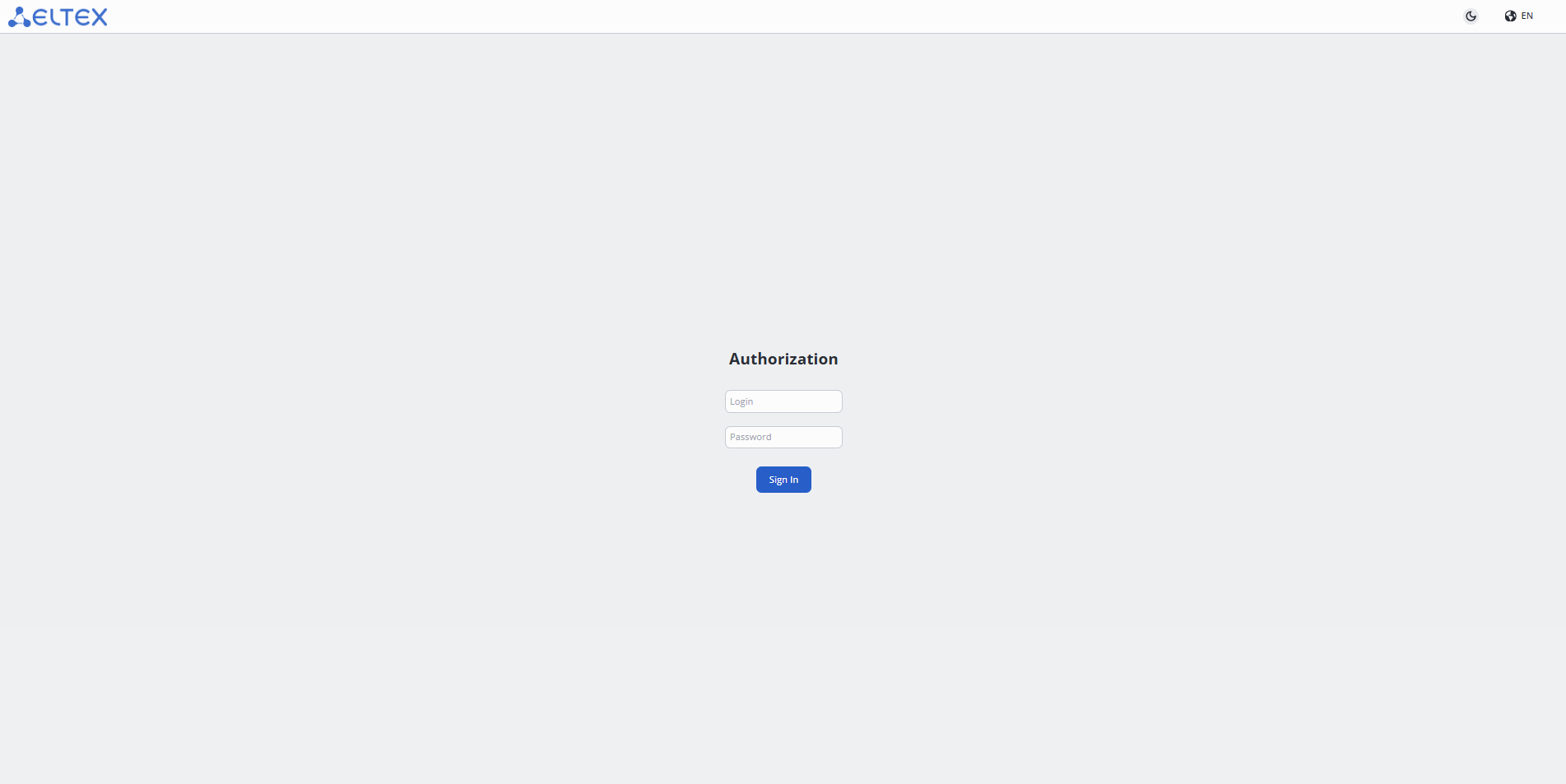
3. Click the "Sign in" button. The "Watch" page will open in the browser window.
"Watch" tab
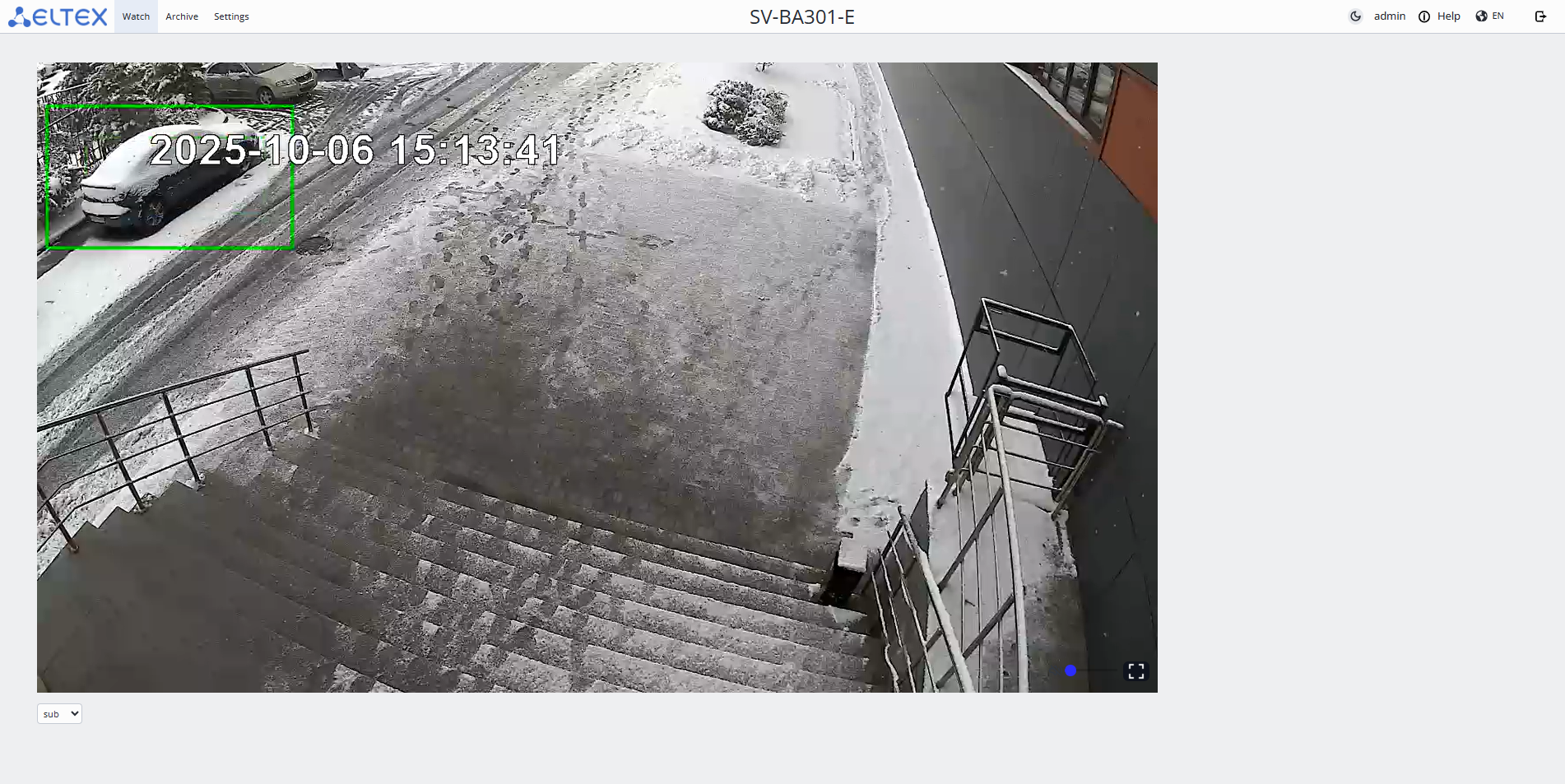
- Streams:
- Main — main stream, has better broadcast quality;
- Sub — secondary stream, has average broadcast quality;
- Mob — mobile stream, has low broadcast quality.
- Main — main stream, has better broadcast quality;
"Archive" tab
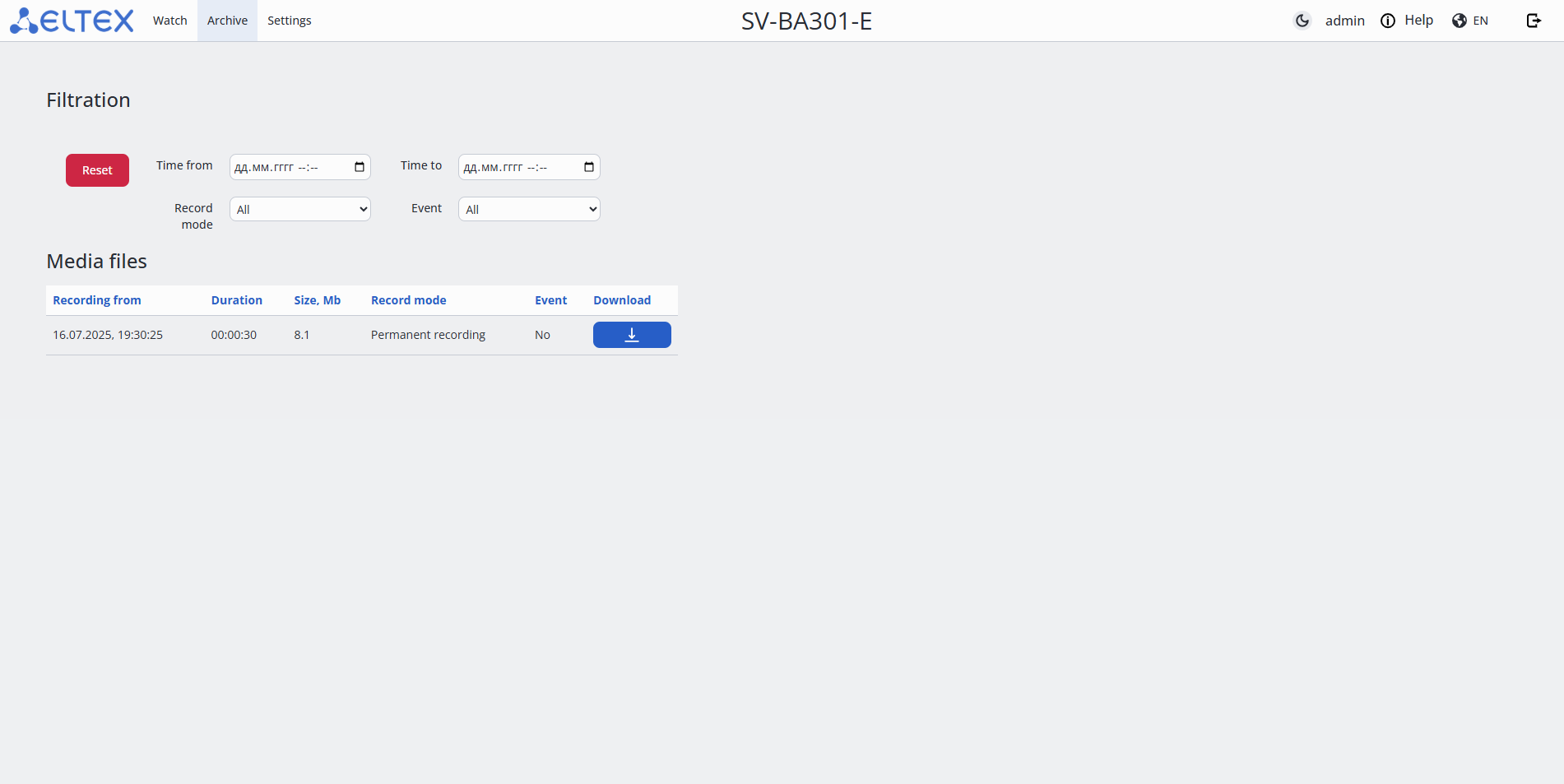
- Filtration — searching for records by specified parameters.
- Time from — filtering media files recorded starting from the specified date and time;
- Time to — filtering media files recorded up to the specified date and time;
- Record mode:
- All — displaying all media files;
- Постоянная запись — displaying media files with the "Continuous recording" mode;
- Запись по событиям — displaying media files with the "Event recording" mode.
- Event:
- All — displaying all media files;
- Движение — displaying media files with the "Motion" recording mode.
"Settings" tab
"Device Information" menu
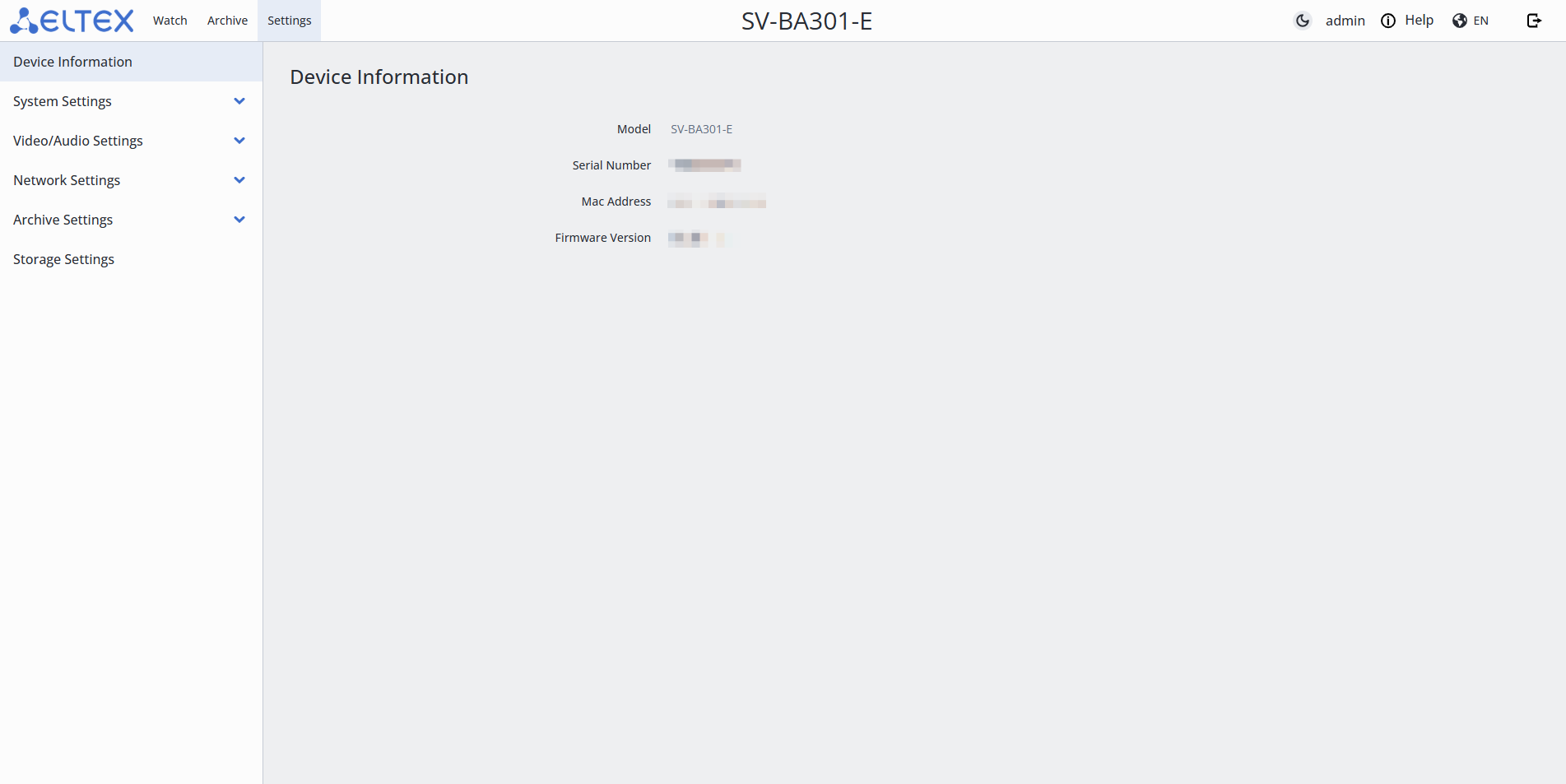
- Menu tabs — for grouping by categories: Watch, Archive, Settings;
- Web interface theme — dark and light;
- Username;
- Web interface help;
- Web interface language;
- Logout;
- Menu items;
- Device information:
- Model — device model name;
- Serial Number — device serial number;
- MAC Address — device MAC address;
- Firmware version — current device firmware version.
"System Settings" tab
"Date And Time"
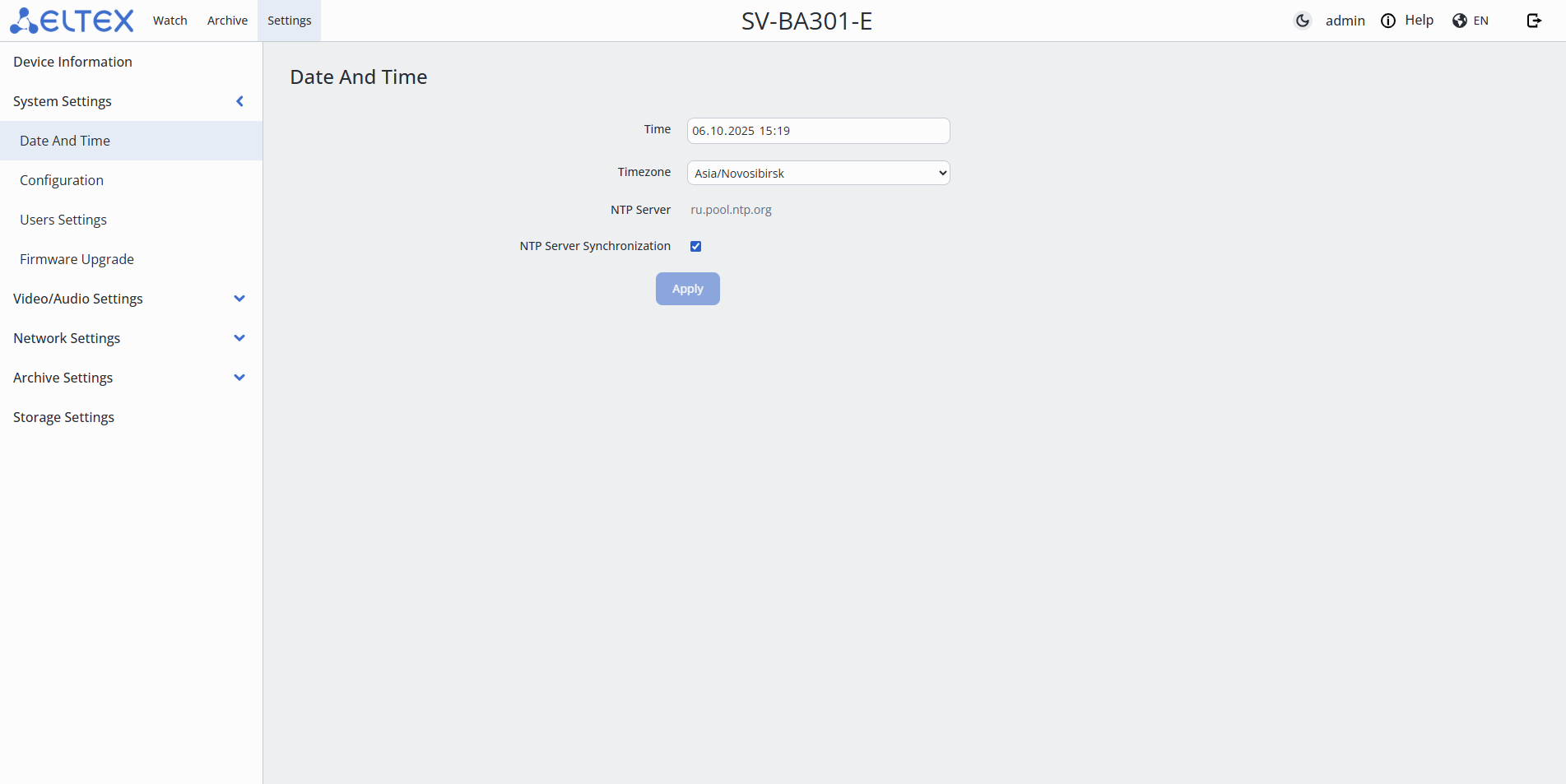
- Time — camera time. Can be edited if synchronization is not enabled;
- Timezone — camera time zone;
- NTP Server — NTP server address;
- NTP Server Synchronization — enabling NTP synchronization.
To save the settings, click the "Apply" button.
"Configuration"
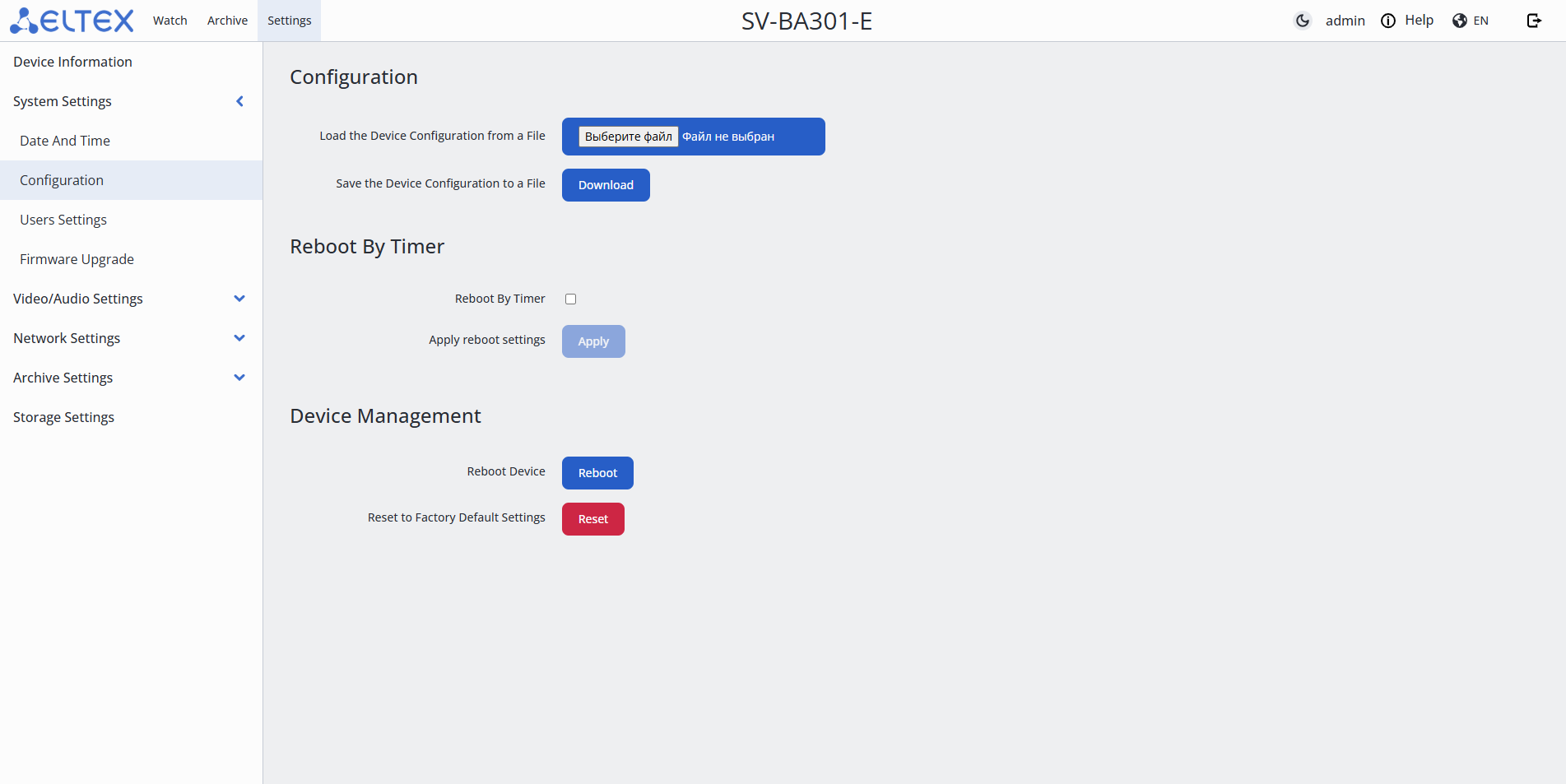
- Configuration — section for working with the device configuration:
- Load the Device Configuration from a File — select the file from which the camera will load its configuration;
- Save the Device Configuration to a File — export the device configuration for further use.
- Reboot By Timer — section for configuring automatic weekly reboot:
- Day — the day of the week when the reboot will occur;
- Time — the exact time when the reboot will occur.
- Device Management:
- Reboot Device;
- Reset to Factory Default Settings.
To save the settings, click the "Apply" button.
"Users Settings"
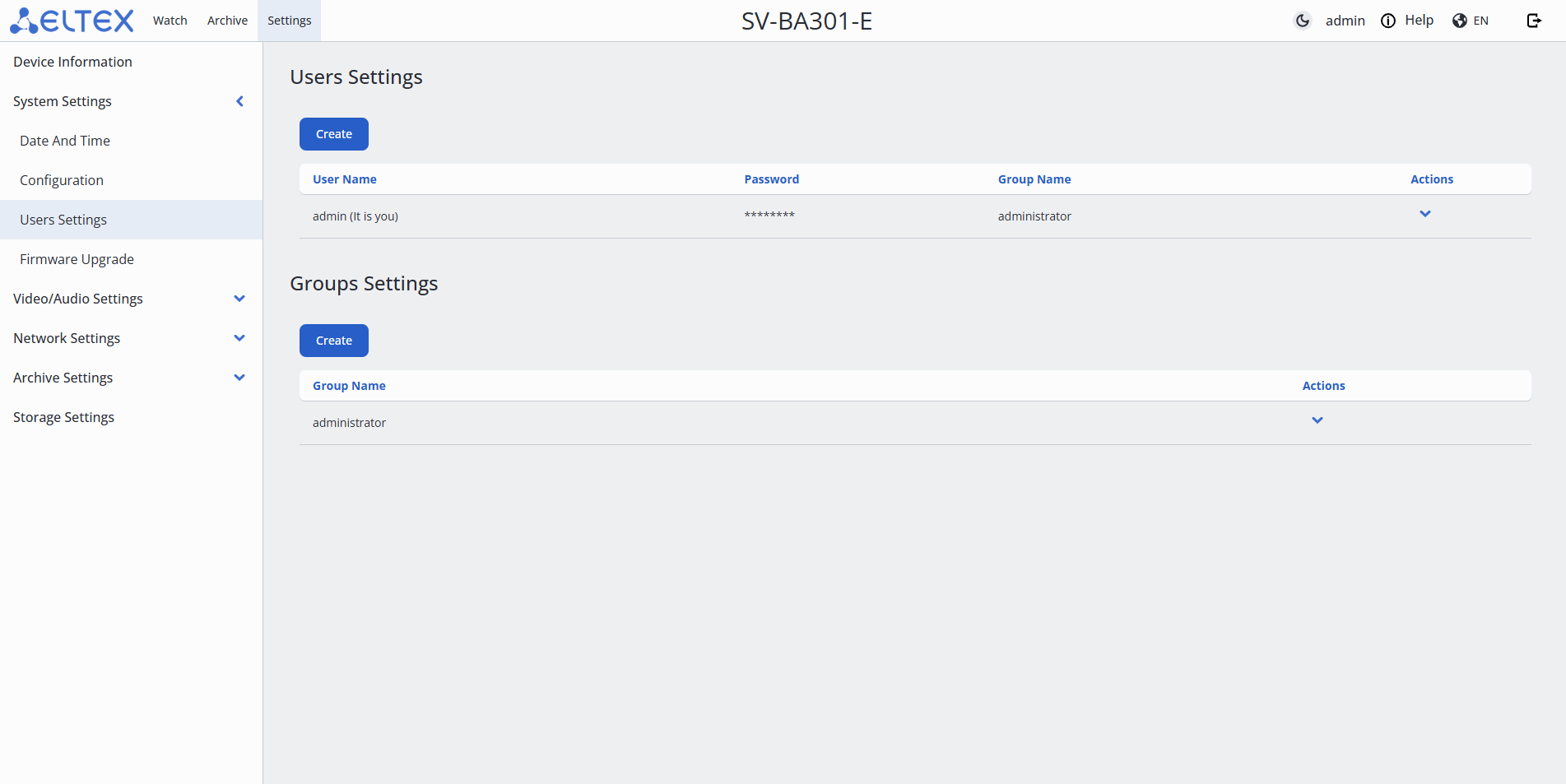
- Users Settings — creating a camera user for interaction with the web interface:
- User Name — user login;
- Password — user password;
- Group Name — group with specific access rights;
- Actions:
- Редактировать — change existing user parameters;
- Удалить — delete user.
- Group Settings — group and access rights settings:
- Group Name — group name;
- Actions:
- Редактировать — change existing user parameters;
- Удалить — delete group.
"Firmware Upgrade"
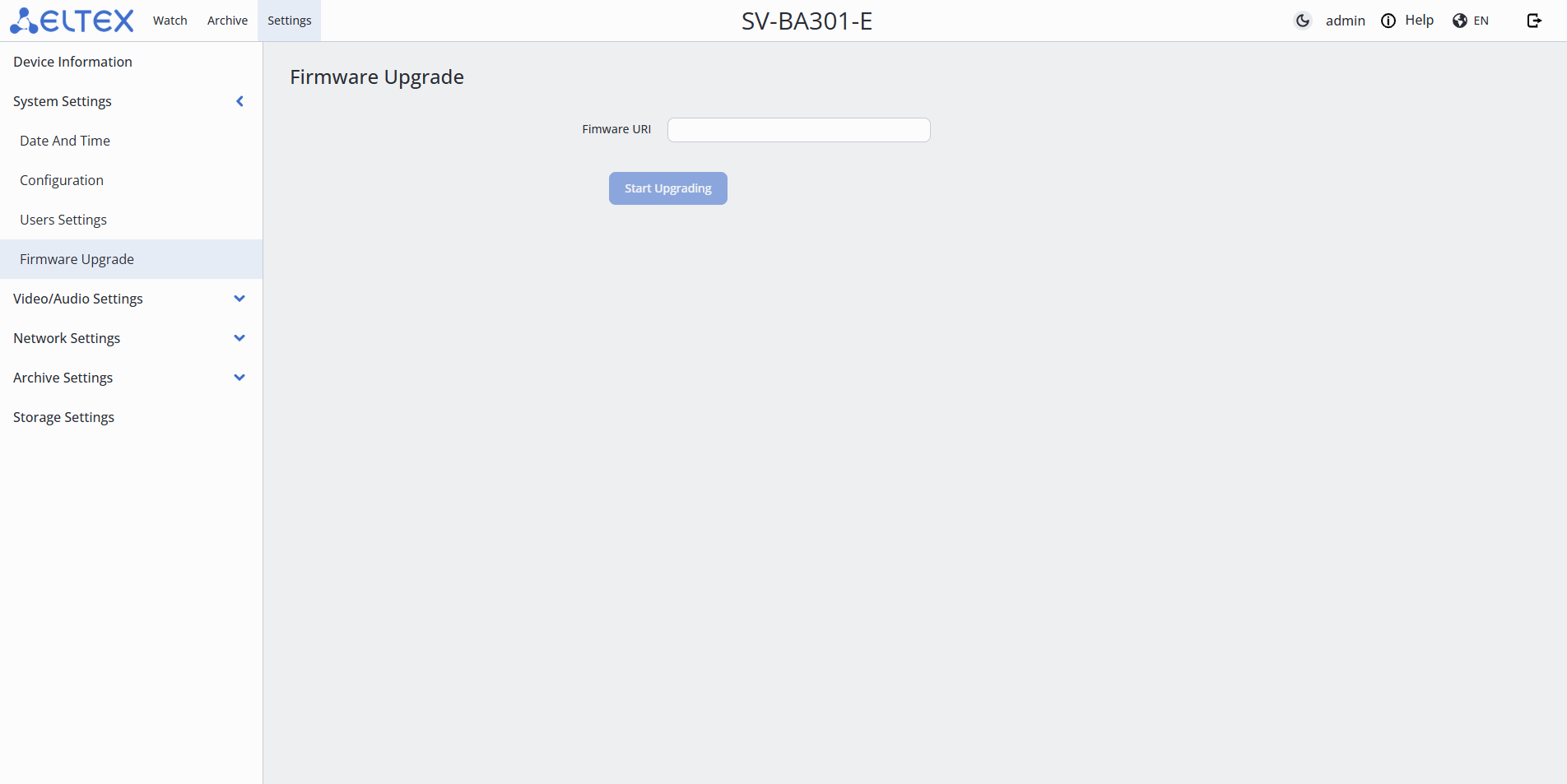
- Firmware URI — URI link from which the camera can download the firmware for updating.
To start the update, press the "Start Upgrading" button.
"Video/Audio Settings"
"Stream Settings"
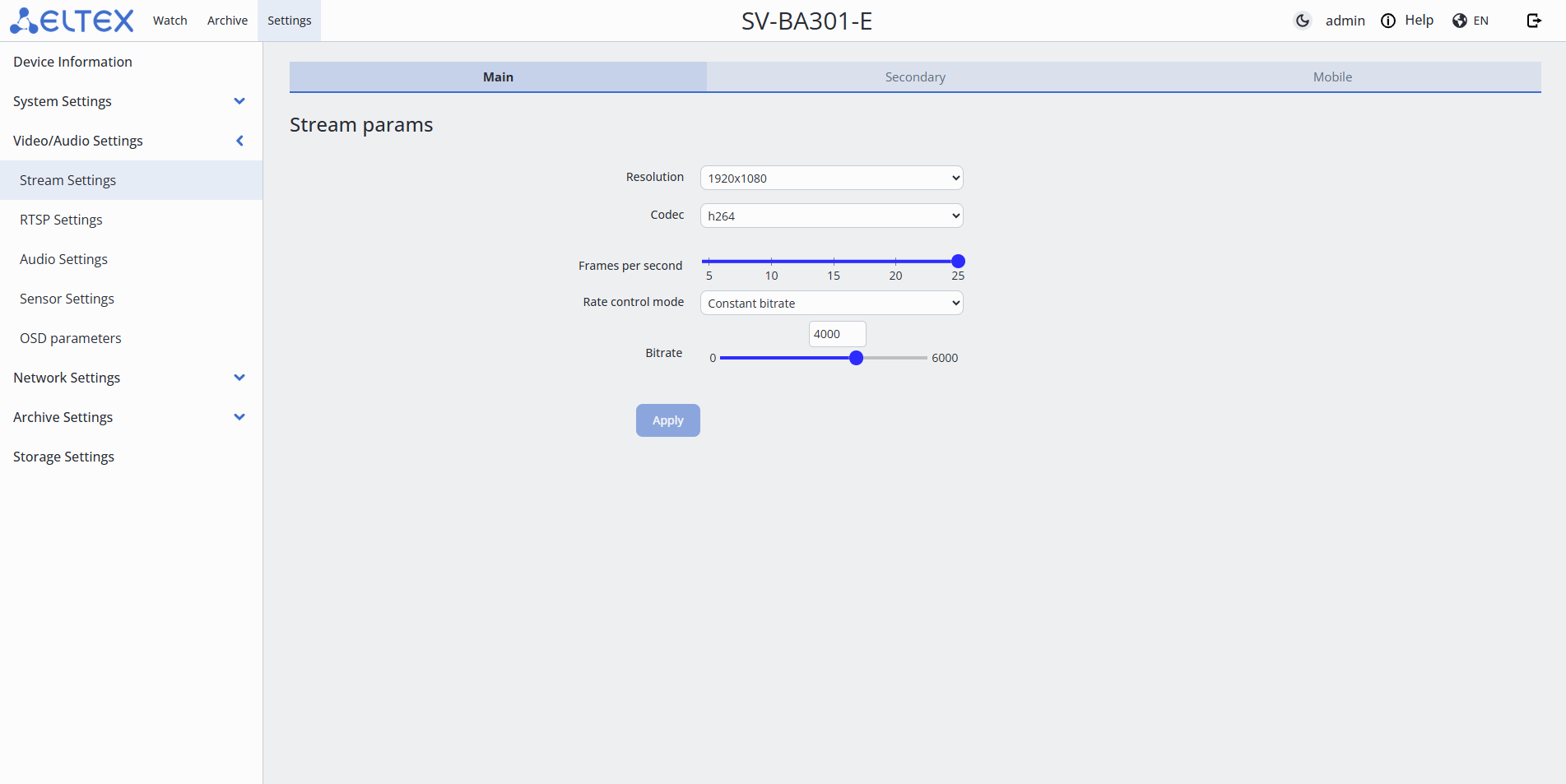
- Streams:
- Main — main stream, has the best broadcast quality;
- Secondary — secondary stream, has average broadcast quality;
- Mobile — mobile stream, has low broadcast quality.
- Main — main stream, has the best broadcast quality;
- Stream params:
- Resolution — selection of the image resolution transmitted from the camera:
- 1280 × 720;
- 1920 × 1080;
- 2560 × 1440.
- Codec — selection of the video compression standard:
- H.264;
- H.265.
- Frames per second — number of frames that will be transmitted per second. The maximum frequency is 25 frames per second;
- Rate control mode — stream encoding mode:
- Constant bitrate — mode in which the stream has a constant bitrate set in the "Bitrate" field;
- Переменный битрейт — mode in which the stream has a variable bitrate. The bitrate varies with the complexity of the image but does not exceed the "Maximum bitrate" value and on average adheres to the "Bitrate" value.
- Bitrate — amount of information transmitted by the camera. Increasing this parameter proportionally increases the quality of the transmitted image. Maximum bitrate — 6000 kbps.
- Resolution — selection of the image resolution transmitted from the camera:
To save the settings, click the "Apply" button.
"RTSP Settings"
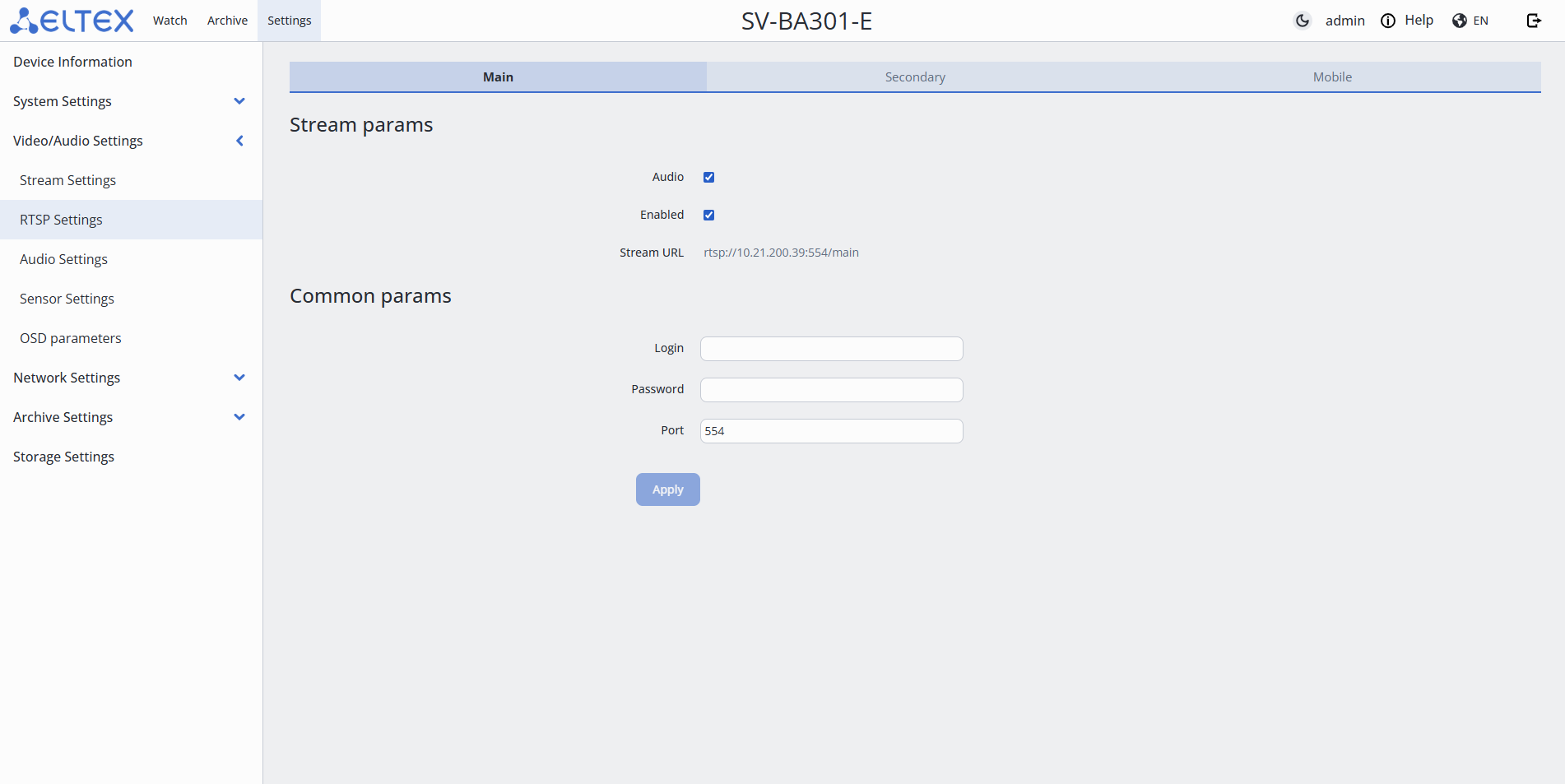
- Streams:
- Main — main stream, has the best broadcast quality;
- Secondary — secondary stream, has average broadcast quality;
- Mobile — mobile stream, has low broadcast quality.
- Main — main stream, has the best broadcast quality;
- Sream params — section for configuring RTSP streaming:
- Audio — enable and disable audio in the stream;
- Enabled — enable and disable the stream;
- Stream URL — link to the selected stream considering the fields "Login", "Password", and "Port" in the "Common params" section;
- Audio — enable and disable audio in the stream;
- Common params:
- Login — username up to 63 characters in Latin alphabet and numbers;
- Password — user password up to 63 characters in Latin alphabet and numbers;
- Port — port through which the stream can be obtained from the RTSP server.
To save the settings, click the "Apply" button.
"Audio Settings"
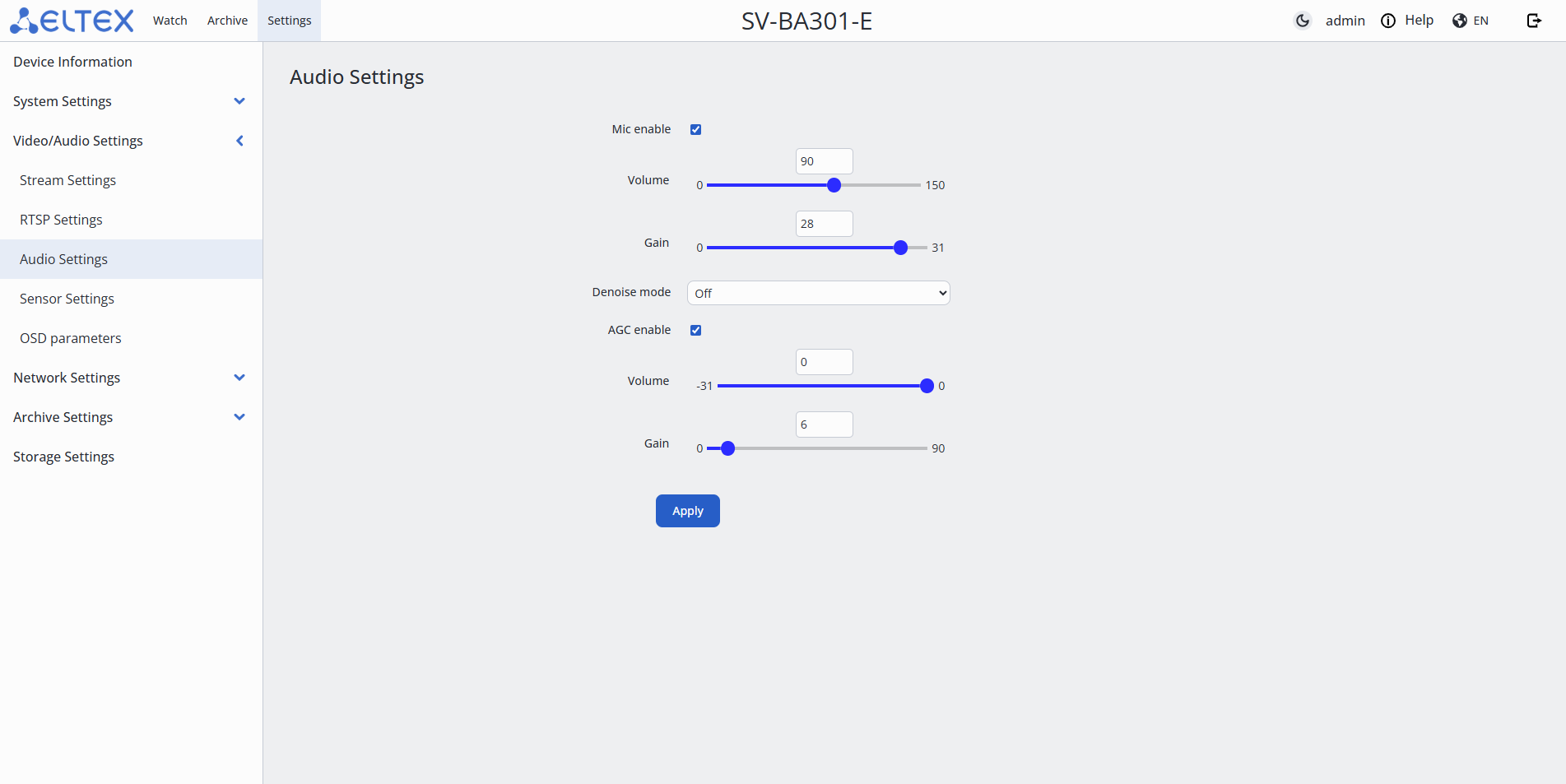
- Включить микрофон — включение и отключение микрофона;
- Громкость — громкость микрофона. Максимальное значение — 150 дБ;
- Усиление — усиление громкости микрофона. Максимальное значение — 31 дБ;
- Режим шумоподавления:
- Off — шумоподавление отключено;
- Low — слабое шумоподавление;
- Medium — среднее шумоподавление;
- High — сильное шумоподавление;
- Max — максимальное шумоподавление.
- Автоматическое усиление:
- Громкость — громкость автоматического усиления микрофона;
- Усиление — усиление громкости микрофона.
Для сохранения настроек нажмите кнопку «Применить».
«Настройки сенсора»
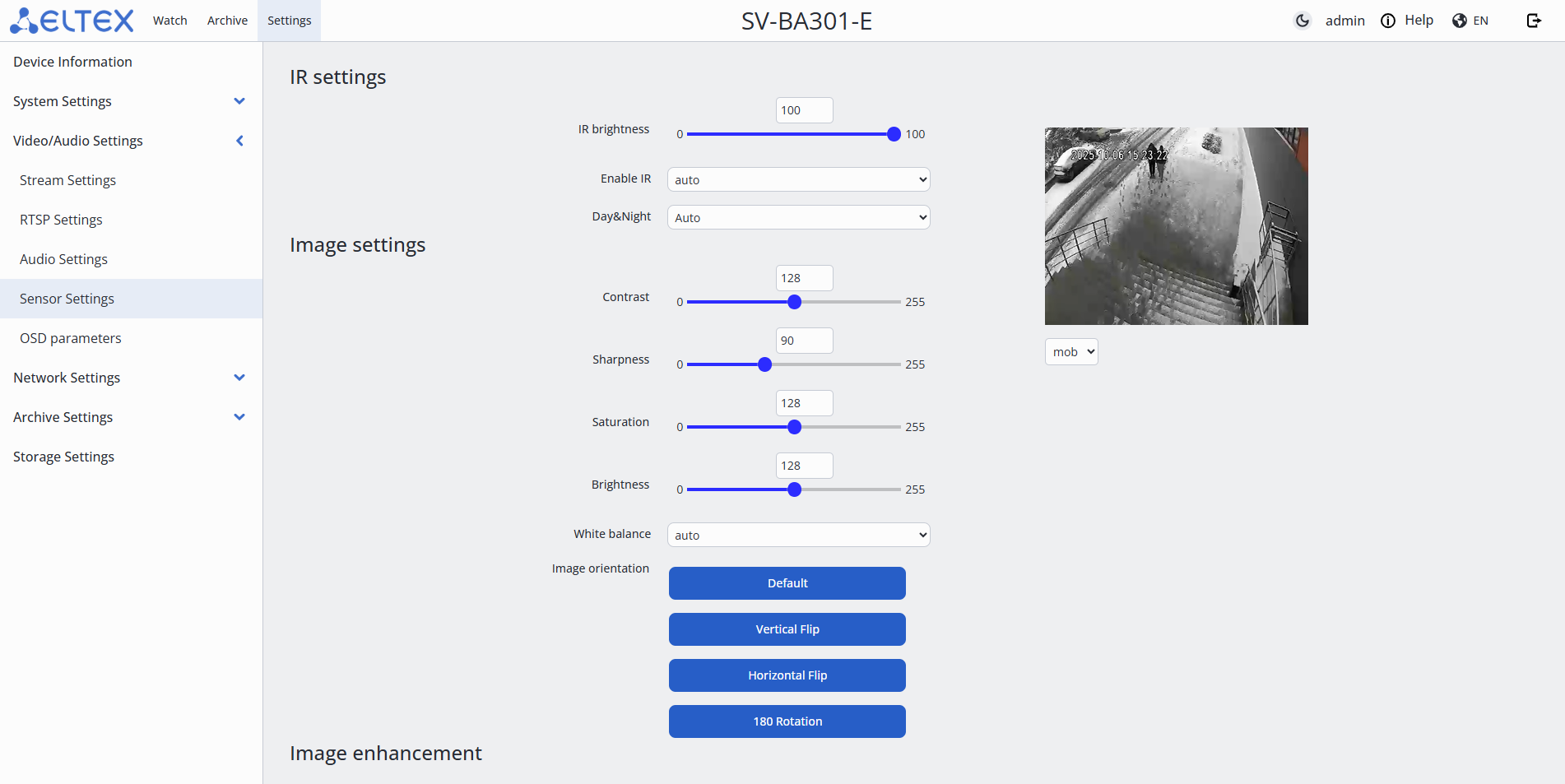
- Настройки ИК-подсветки:
- Яркость ИК-подсветки;
- Включить ИК-подсветку:
- off:
- on;
- auto.
- День&Ночь — выбор режима инфракрасной подсветки:
- Автоматически — автоматическое переключение между дневным и ночным режимом по уровню освещенности;
- День — инфракрасная подсветка всегда выключена;
- Ночь — инфракрасная подсветка всегда включена.
- Настройки изображения:
- Контраст — контраст изображения. Возможно задать значение в диапазоне от 0 до 255. Значение по умолчанию — 128;
- Резкость — резкость изображения. Возможно задать значение в диапазоне от 0 до 255. Значение по умолчанию — 90;
- Насыщенность — красочность изображения. Возможно задать значение в диапазоне от 0 до 255. Значение по умолчанию — 128;
- Яркость — яркость изображения. Возможно задать значение в диапазоне от 0 до 255. Значение по умолчанию — 128;
- Баланс белого — используется для регулировки цветовой температуры в зависимости от окружающей среды:
- auto — автоматическая настройка;
- day — дневной свет;
- cloud — облачно;
- inc — лампа накаливания;
- fluo — флуоресцентный свет;
- twi — сумерки;
- shade — тень;
- warm_fluo — теплый флуоресцентный свет.
- Управление ориентацией изображения — управление изображением камеры:
- Стандартная — камера передает изображение так, как пользователь его видит своими глазами;
- Отражение по вертикали — изображение отражается по вертикальной оси;
- Отражение по горизонтали — изображение отражается по горизонтальной оси;
- Поворот на 180 — изображение отражается по вертикали и горизонтали, тем самым предоставляя изображение как в режиме «Стандартная» для физически перевернутой камеры.
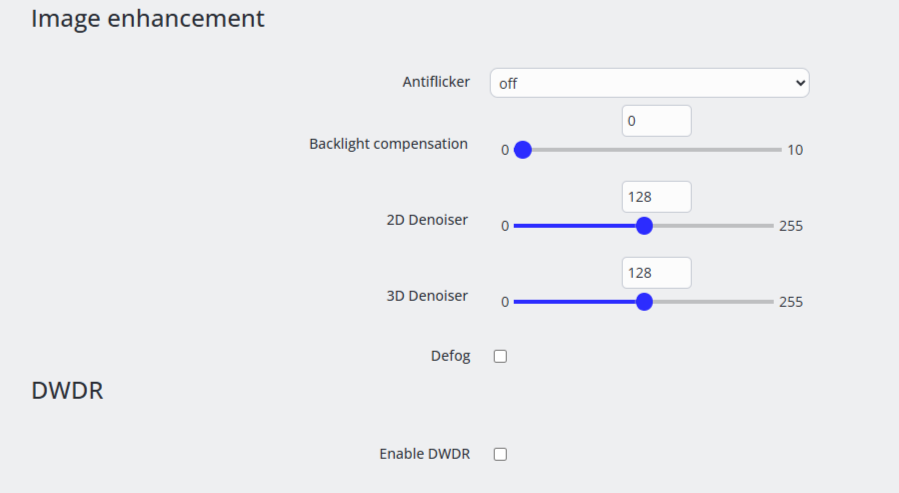
- Улучшение изображения:
- Подавление мерцания — компенсация мерцания ламп от электросети разной частоты:
- off;
- 50 Hz;
- 60 Hz.
- Компенсация встречной засветки — устранение затемнения, когда объект находится на фоне яркого источника света. Возможно задать значение в диапазоне от 0 до 10;
- Двумерное шумоподавление — шума в каждом кадре за счет анализа соседних пикселей. Возможно задать значение в диапазоне от 0 до 255. Значение по умолчанию — 128;
- Трехмерное шумоподавление — устранение шума путем анализа как соседних пикселей, так и изменений между кадрами. Возможно задать значение в диапазоне от 0 до 255. Значение по умолчанию — 128;
- Антитуман — повышение ясности и контрастности изображения при плохой видимости, вызванной туманом или дымкой:
- Мощность — возможно задать значение в диапазоне от 0 до 255. Значение по умолчанию — 128.
- Подавление мерцания — компенсация мерцания ламп от электросети разной частоты:
- DWDR:
- Включить WDR — улучшение видимости изображения при любом перепаде уровней освещенности:
- Мощность — степень высветления темных участков. Возможно задать значение в диапазоне от 0 до 255;
- Hilight — степень подавления ярких участков. Возможно задать значение в диапазоне от 0 до 10.
- Включить WDR — улучшение видимости изображения при любом перепаде уровней освещенности:
«Параметры OSD»
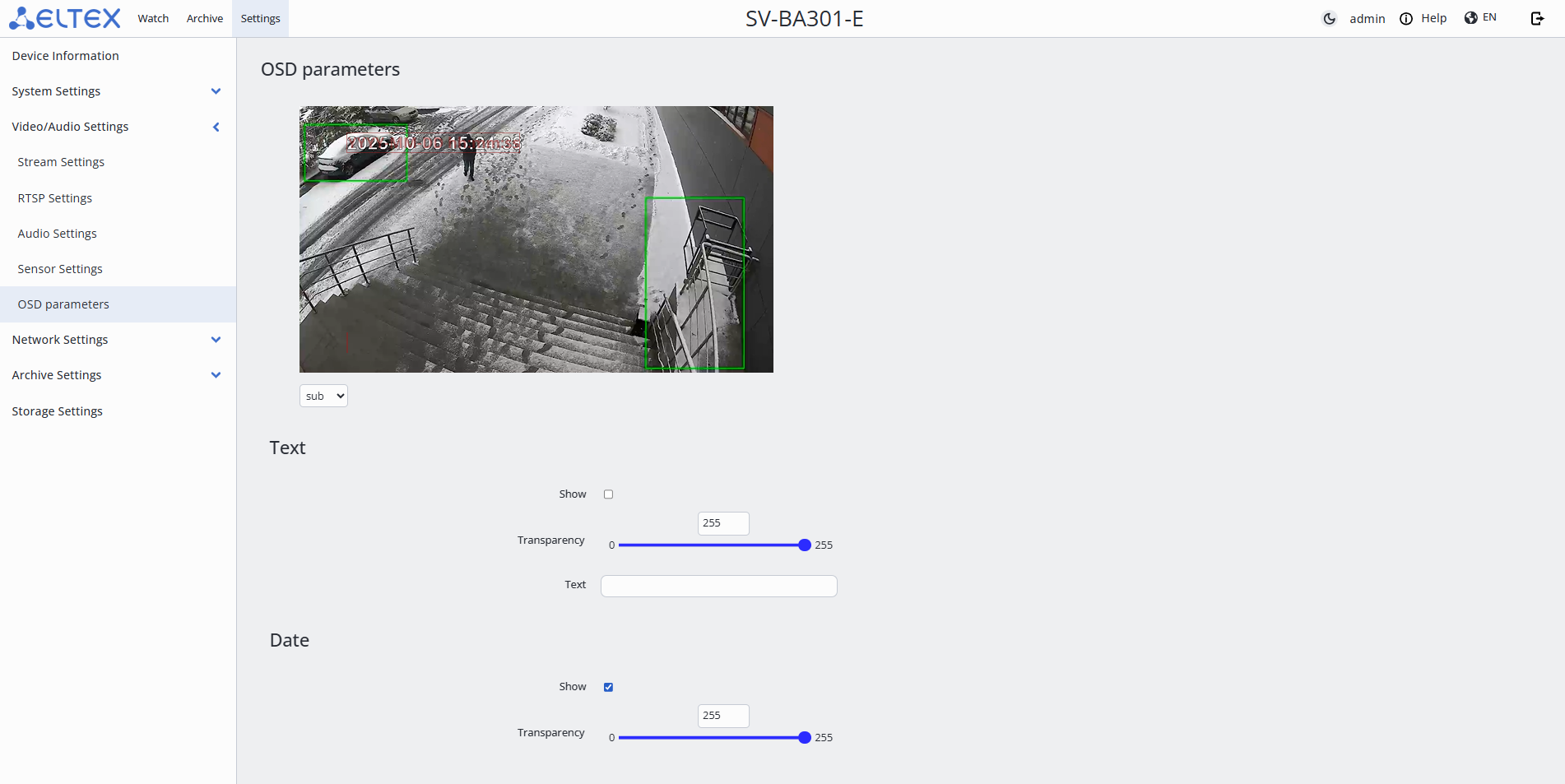
- OSD — On-Screen Display, отображаемый на экране текст;
- Текст:
- Показать — включить отображение пользовательского текста;
- Прозрачность — прозрачность отображаемое текста. Возможно задать значение в диапазоне от 0 до 255;
- Текст — поле для ввода текста для отображения.
- Дата:
- Показать — включить отображение даты;
- Прозрачность — прозрачность отображаемой даты. Возможно задать значение в диапазоне от 0 до 255.
- Текст:
Меню «Настройки сети»
«Сеть»
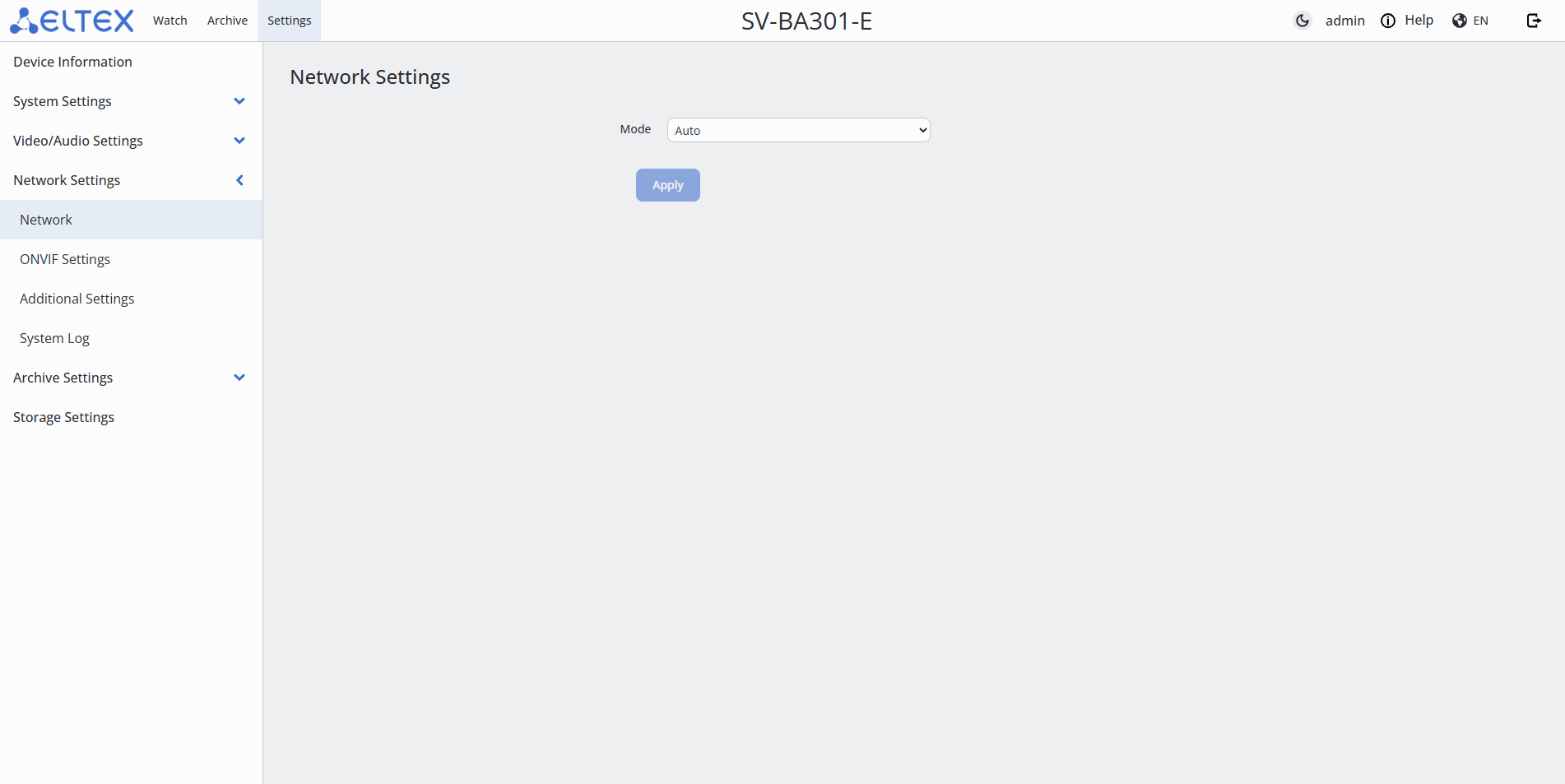
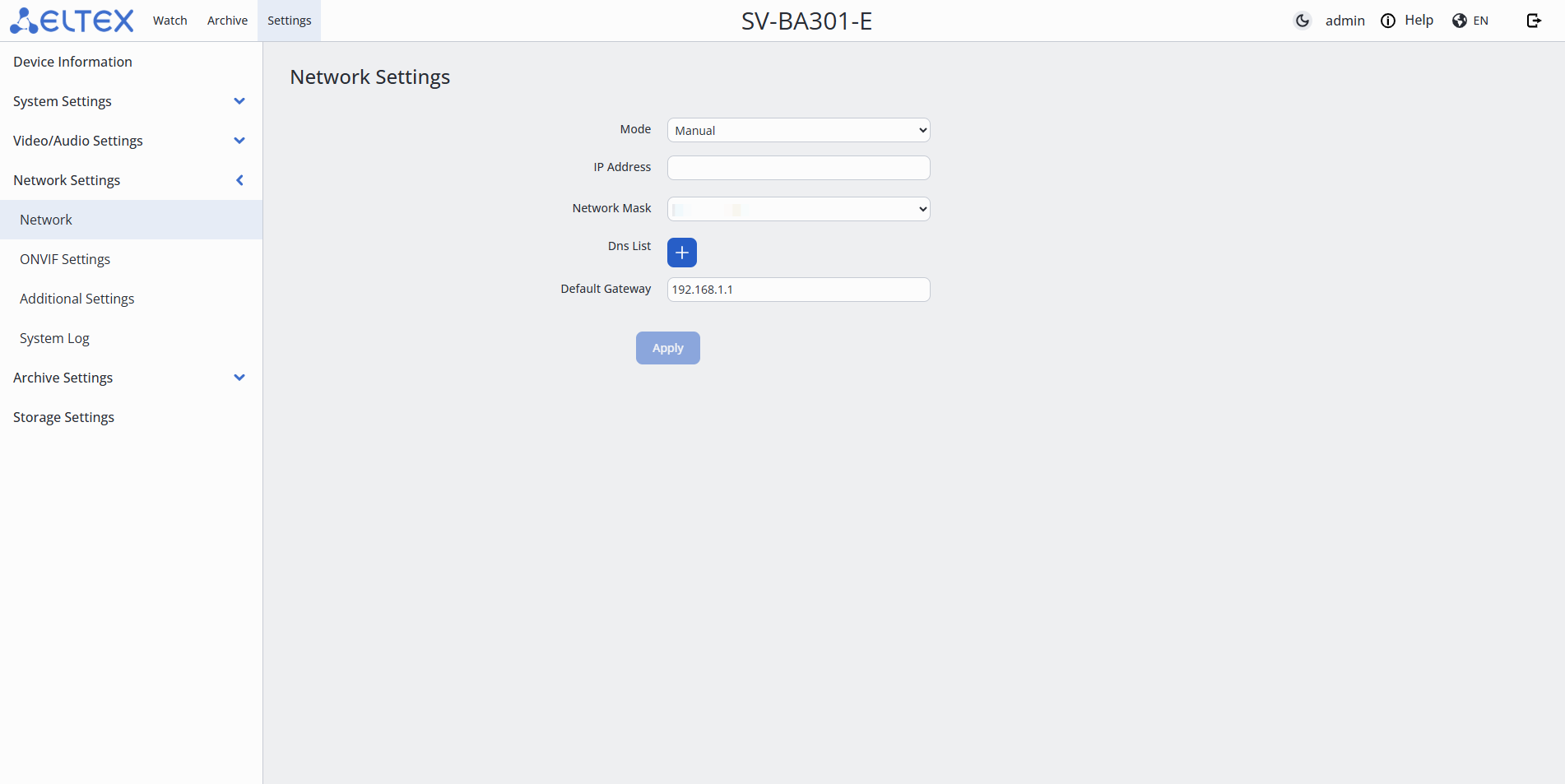
- Режим:
- Автоматически — получение всех настроек по DHCP;
- Вручную — установка всех параметров сети вручную:
- IP-адрес;
- Маска подсети;
- Список DNS-серверов — адреса DNS-серверов;
- + — добавление резервного DNS-сервера;
- Шлюз по умолчанию.
Для сохранения настроек нажмите кнопку «Применить».
«Настройки ONVIF»
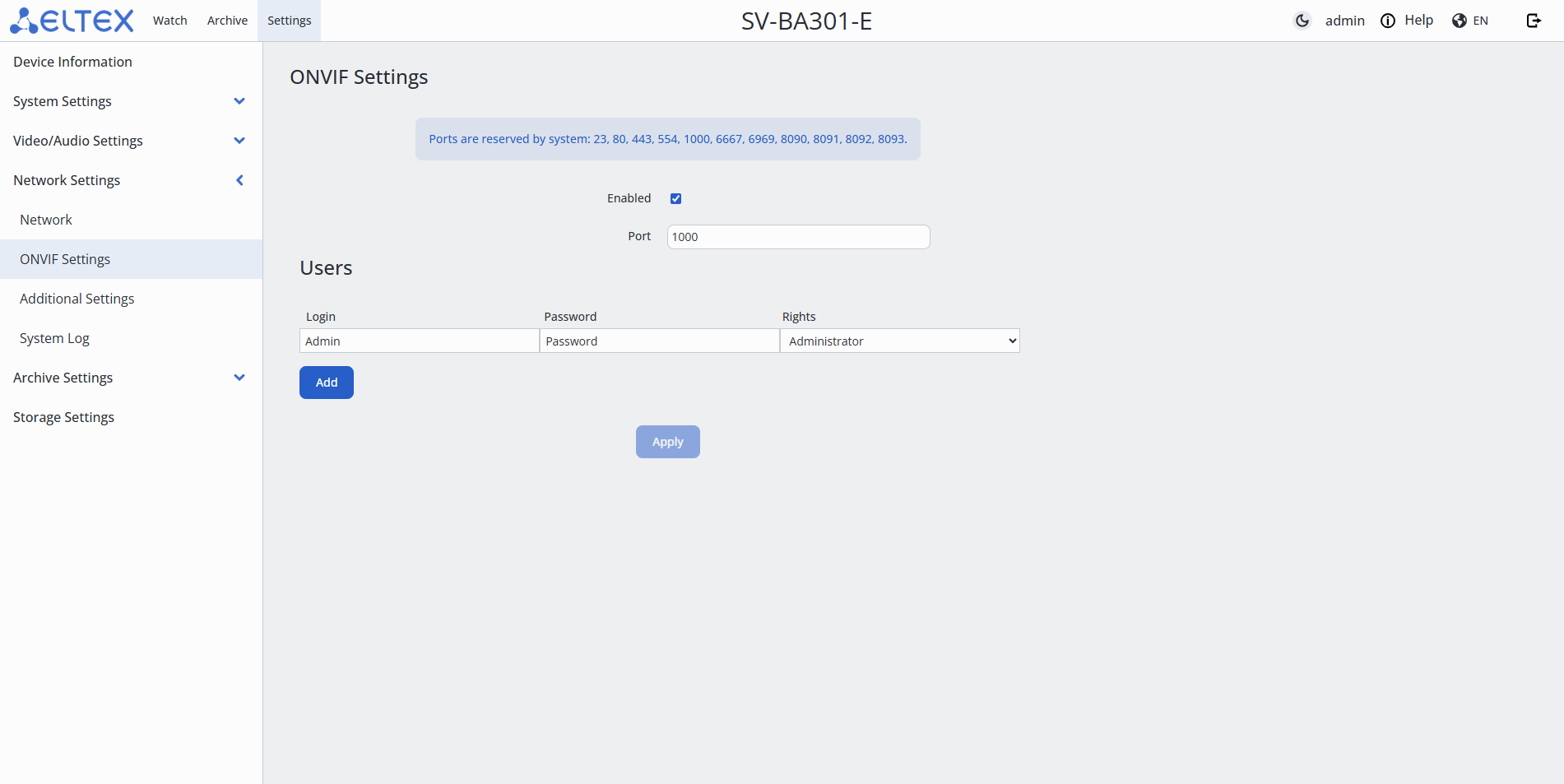
- Включено — включение протокола ONVIF;
- Порт — порт, через который будет осуществляться взаимодействие камеры с системами управления по протоколу ONVIF. По умолчанию используется порт 1000;
При настройке портов необходимо обратить внимание на порты, зарезервированные системой, чтобы не произошло конфликта портов. Порты, зарезервированные системой: 23, 80, 443, 554, 1000, 8090, 8091, 8092, 8093.
- Пользователи — создание пользователей с определенными правами доступа:
- Логин — логин пользователя;
- Пароль — пароль пользователя;
- Права — уровень прав доступа пользователя:
- Administrator — полный доступ ко всем функциям устройства;
- Operator — доступ к основным функциям устройства. Не может изменять настройки или управлять пользователями;
- Media user — ограниченный доступ (только просмотр). Нет прав на изменение конфигурации;
- Anonymous — минимальные права (если разрешено в настройках). Обычно только просмотр без авторизации.
Для сохранения настроек нажмите кнопку «Применить».
«Доп. настройки»
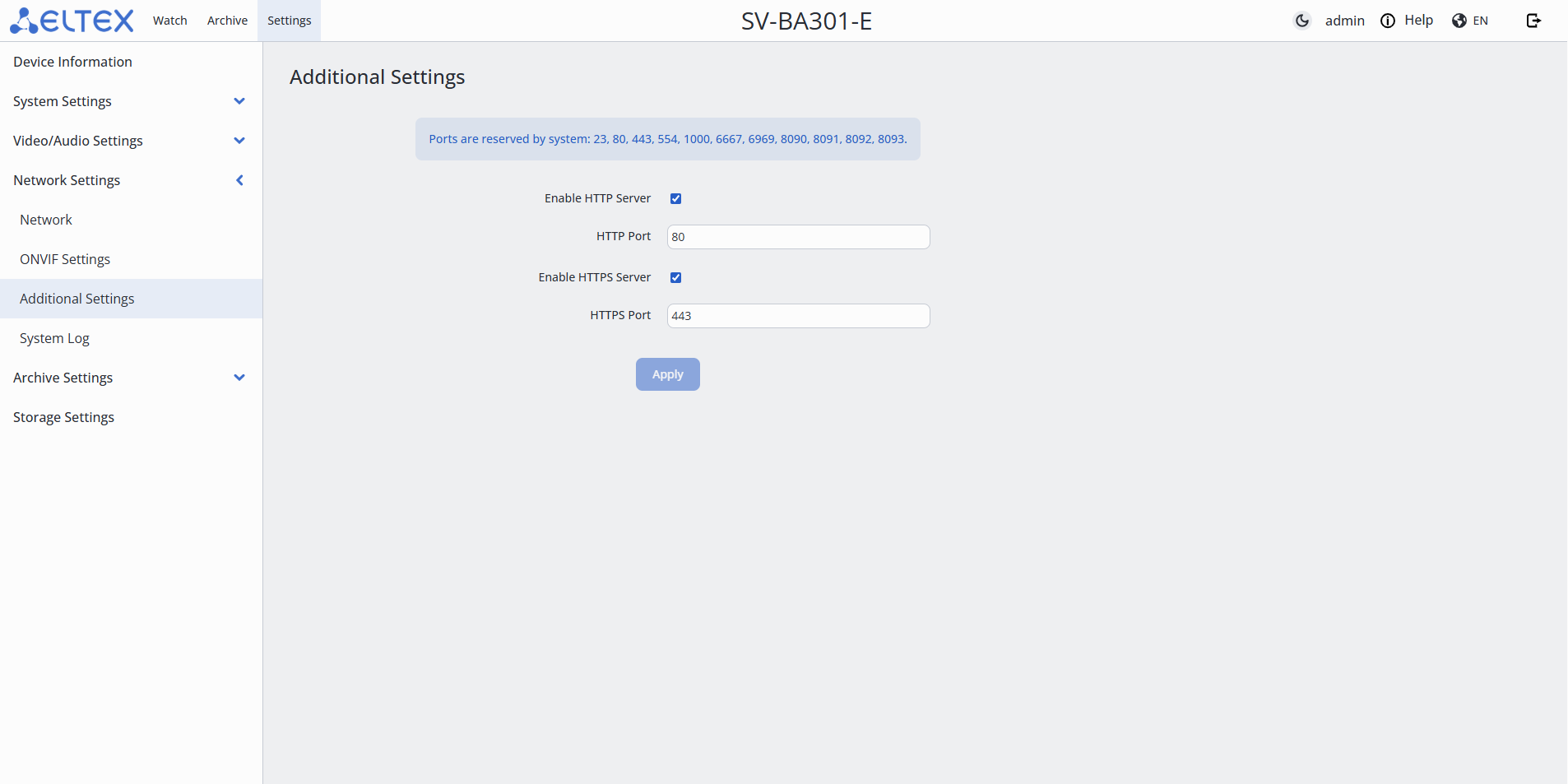
- вкл. HTTP — доступ к веб-интерфейсу камеры по протоколу HTTP;
- HTTP-порт — порт, через который будет осуществляться взаимодействие с веб-интерфейсом камеры по протоколу HTTP. По умолчанию используется порт 80;
При настройке портов необходимо обратить внимание на порты, зарезервированные системой, чтобы не произошло конфликта портов. Порты, зарезервированные системой: 23, 80, 443, 554, 1000, 8090, 8091, 8092, 8093.
- вкл. HTTPS — доступ к веб-интерфейсу камеры по протоколу HTTPS;
- HTTPS-порт — порт, через который будет осуществляться взаимодействие с веб-интерфейсом камеры по протоколу HTTPS. По умолчанию используется порт 443.
Для сохранения настроек нажмите кнопку «Применить».
«Системный журнал»
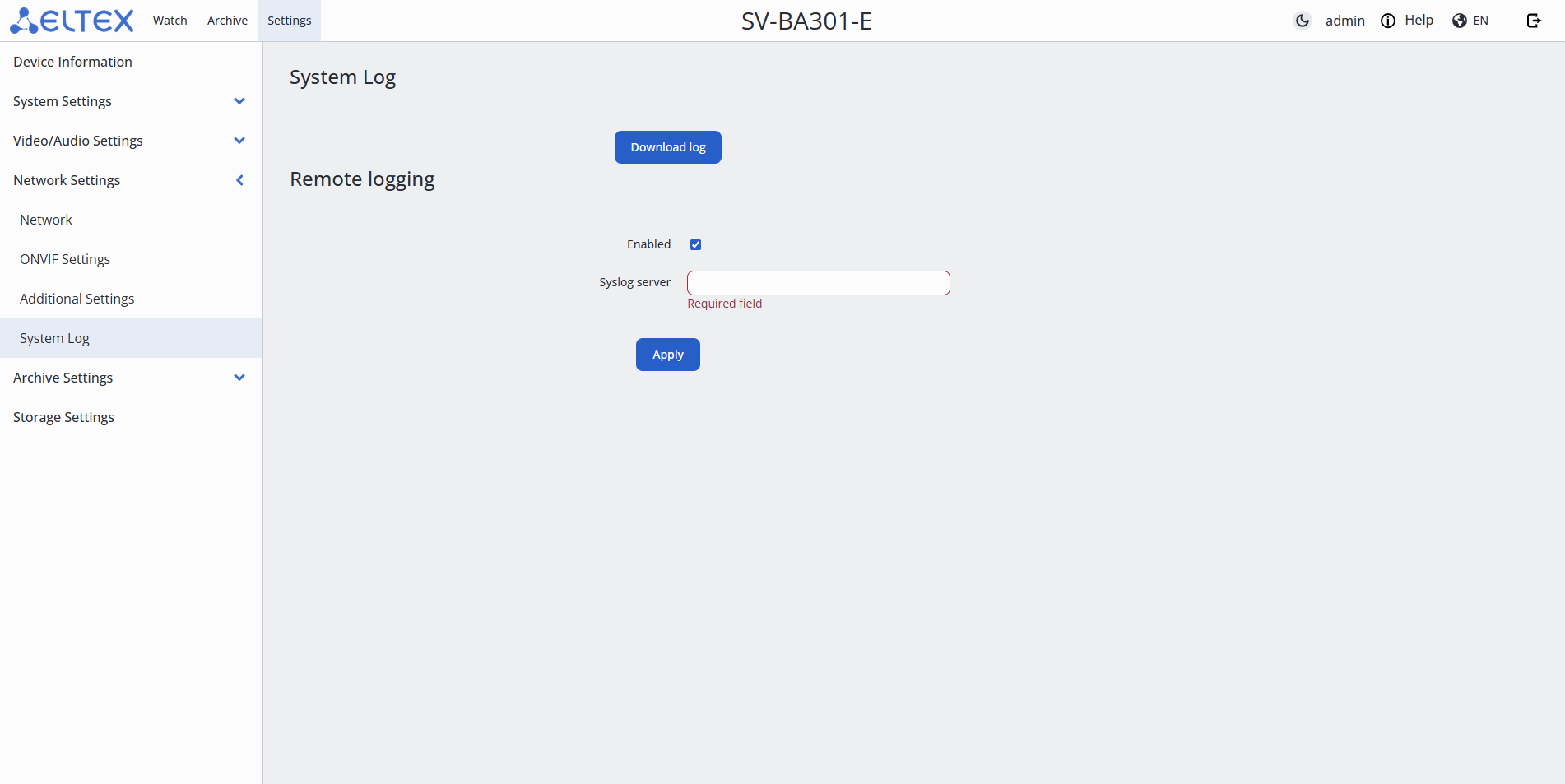
- Скачать журнал — скачать системный журнал;
- Удаленное логирование — раздел для настройки логов на удаленный сервер:
- Syslog-сервер — адрес удаленного syslog-сервера.
Для сохранения настроек нажмите кнопку «Применить».
Меню «Настройки архива»
«Расписание»
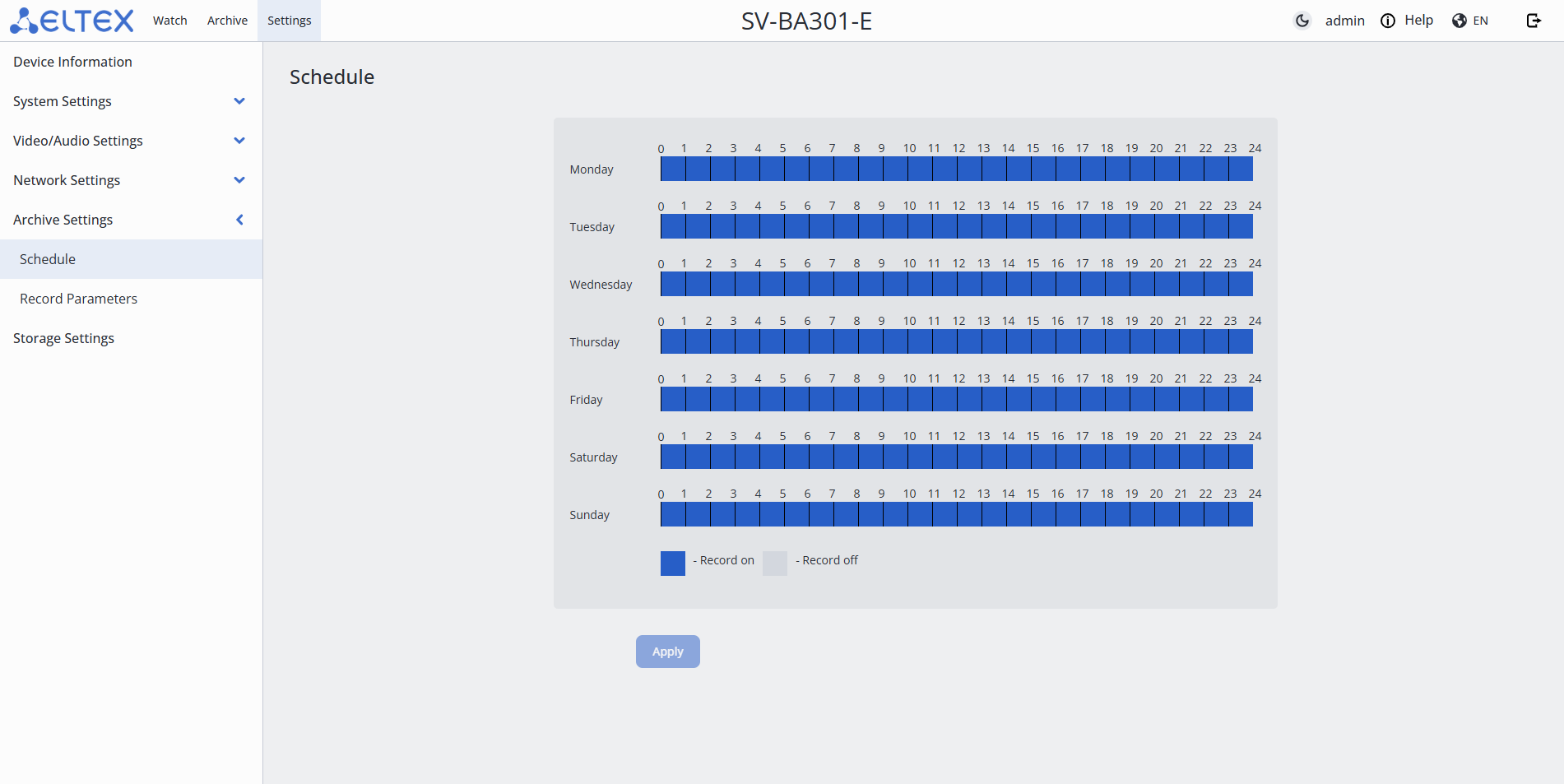
- Расписание — настройка периода, в который камера будет вести запись. Для выбора необходимых промежутков выделите их нажатием левой кнопкой мыши.
Для сохранения настроек нажмите кнопку «Применить».
«Параметры записи»
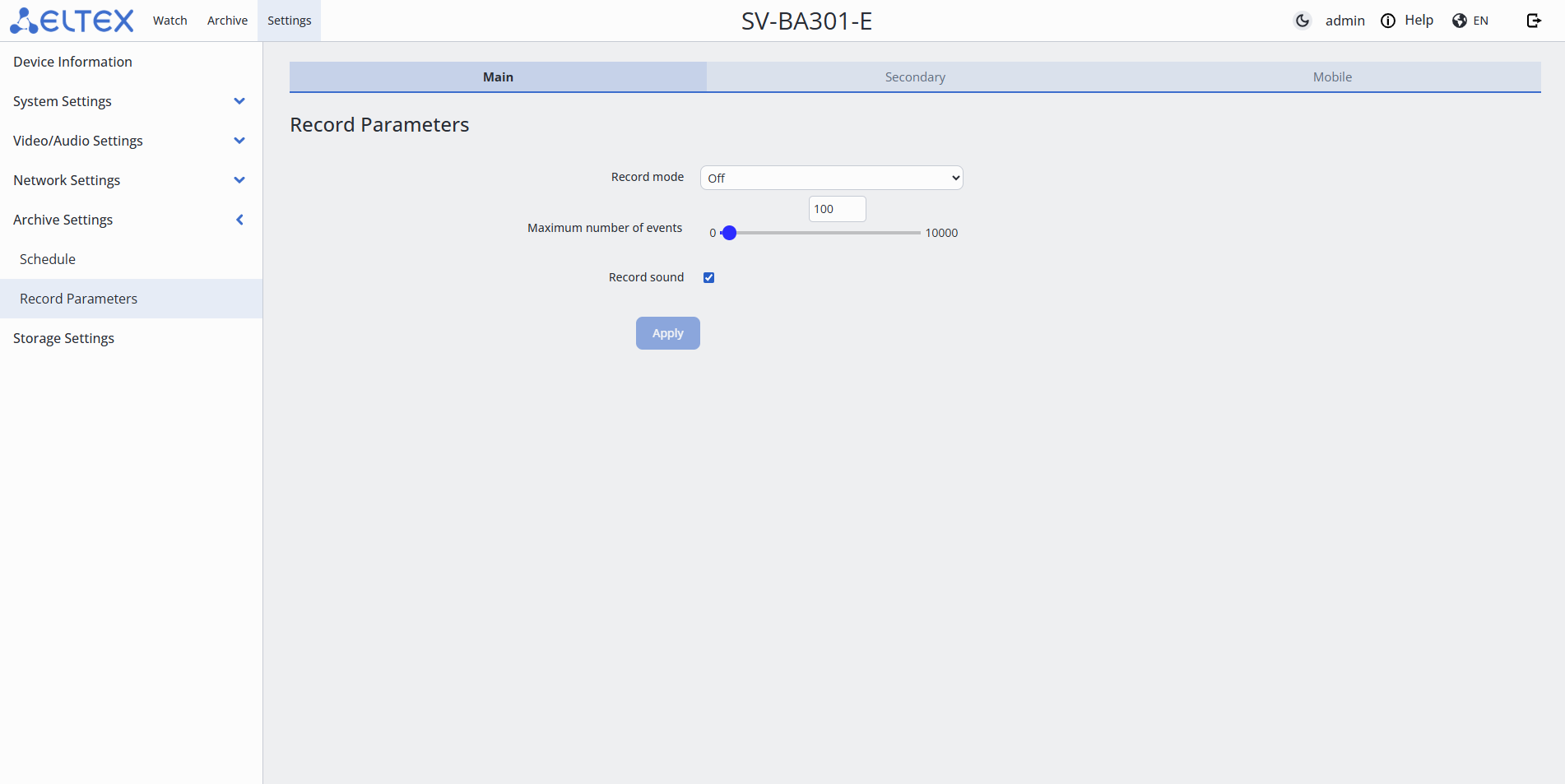
- Потоки:
- Основной поток — основной поток, имеет лучшее качество трансляции;
- Вспомогательный поток — второстепенный поток, имеет среднее качество трансляции;
- Мобильный поток — мобильный поток, имеет низкое качество трансляции.
- Основной поток — основной поток, имеет лучшее качество трансляции;
- Режим записи:
- Постоянная запись — видеозапись ведется постоянно;
- Запись по событиям — видеозапись ведется только при обнаружении события;
- Отключено — видеозапись не ведется.
- Максимальное число событий — сохранение установленного числа событий на MicroSD-карту. При превышении числа событий старые записи будут перезаписываться. Возможно задать значение в диапазоне от 0 до 10000;
- Записывать звук — включение/выключение микрофона во время записи.
Для сохранения настроек нажмите кнопку «Применить».
Меню «Управление хранением»
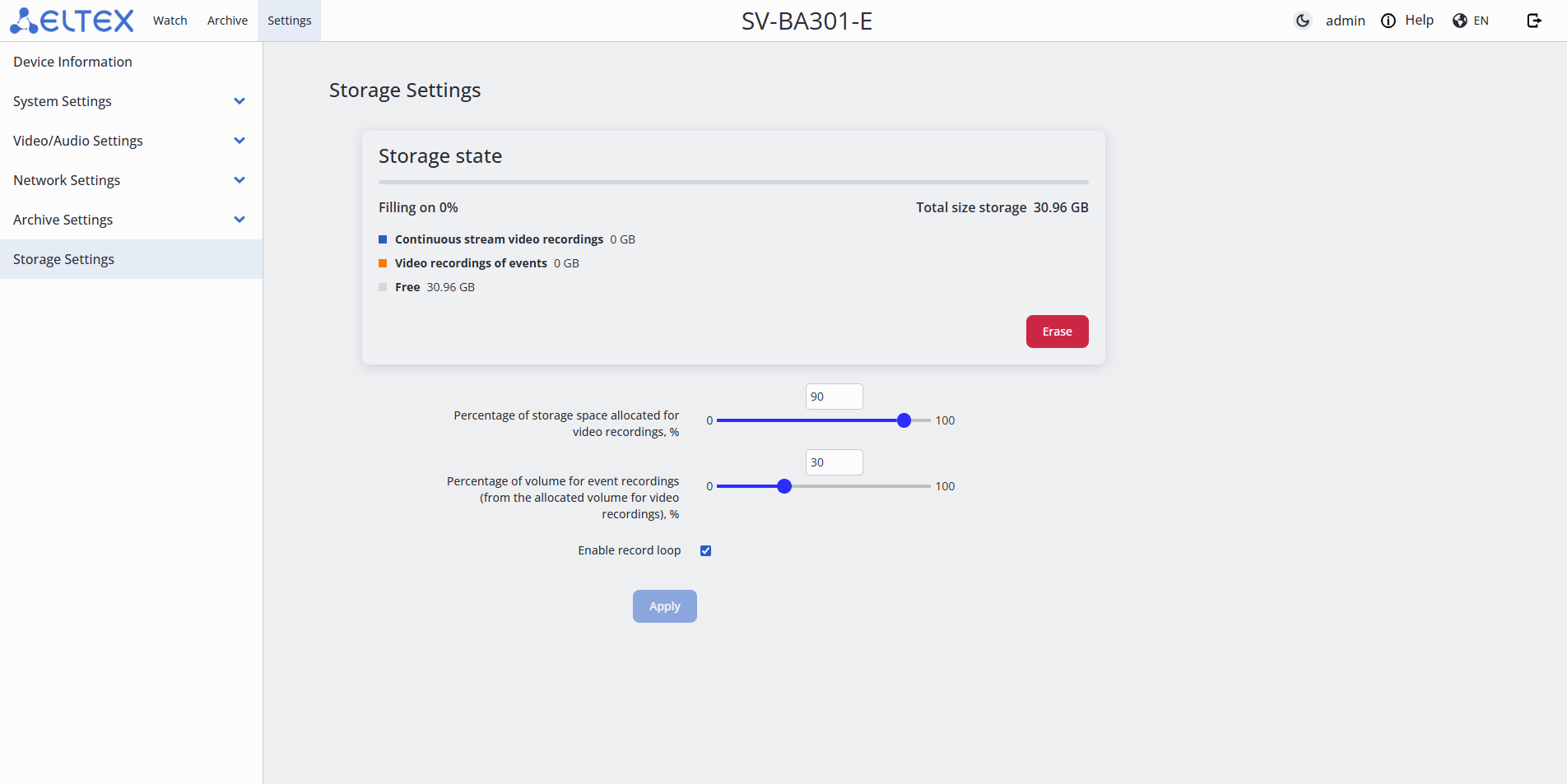
- Форматировать — форматирование MicroSD-карты для записи архива;
- Процент объема накопителя, выделенный для видеозаписей, % — указание, какая часть общего объема накопителя будет использоваться для хранения видео. Возможно задать значение в диапазоне от 0 до 100;
- Процент объема для записей по событию (от выделенного объёма для видеозаписей), % — указание, сколько места из этого объема будет выделено для записи по событиям. Возможно задать значение в диапазоне от 0 до 100;
- Включить ротацию записей — при заполнении накопителя старые записи будут перезаписаны новыми.
При записи двух потоков с разными режимами записи объем хранилища делится согласно установленным параметрам.
Для сохранения настроек нажмите кнопку «Применить».